Sunday, 16 June 2019
1st Sunday after Pentecost
Commemoration of the first Sunday after Pentecost
Deus, in te sperantium fortitude, adesto propitius invocationibus nostris: et quia sine te nihil potest mortalis infirmitas, praesta auxilium gratiae tuae: ut in exsequendis mandatis tuis, et voluntate tibi et actione placeamus.
O God, the strength of all those who put their trust in Thee, mercifully hear our prayers, and because through the weakness of our mortal nature we can do nothing without Thee, grant us the help of Thy grace, that in fulfilling Thy commandments, we may please Thee both in will and deed.

Wednesday, 2 January 2019
2nd January, Octave of St Stephen, First Martyr
Octave of St Stephen, First Martyr
 Sederunt principes, et adversum me loquebantur: et iniqui persecuti sunt me: adjuva me, Domine Deus meus, quia servus tuus exercebatur in tuis justificationibus. * Beati immaculati in via, qui ambulant in lege Domini.
Princes sat, and spoke against me: and the wicked persecuted me: help me, O Lord my God, for Thy servant was employed in Thy justifications.* Blessed are the undefiled in the way, who walk in the law of the Lord. (Psalm 118:23,86, 23, 1 from the Introit of Mass)
Sederunt principes, et adversum me loquebantur: et iniqui persecuti sunt me: adjuva me, Domine Deus meus, quia servus tuus exercebatur in tuis justificationibus. * Beati immaculati in via, qui ambulant in lege Domini.
Princes sat, and spoke against me: and the wicked persecuted me: help me, O Lord my God, for Thy servant was employed in Thy justifications.* Blessed are the undefiled in the way, who walk in the law of the Lord. (Psalm 118:23,86, 23, 1 from the Introit of Mass)
Omnipotens sempiterne Deus, qui primitias Martyrum in beati Levitae Stephani sanguine dedicasti: tribue, quaesumus; ut pro nobis intecessor exsistat, qui pro suis etiam persecutoribus exoravit Dominum nostrum Jesum Christum Filium tuum.
O almighty and everlasting God, who didst consecrate the first-fruits of the martyrs in the blood of the blessed Levite Stephen: grant, we beseech Thee, that he may intercede for us, who entreated even for his persecutors, our Lord Jesus Christ Thy Son.
(Collect)
(Sermo 2 de S. Stephano)
The Catholic Encyclopaedia on St Stephen: http://www.newadvent.org/cathen/14286b.htm
Reference for the sermon from St Augustine: http://www.breviary.net/propseason/christmas/propseasonchri0102.htm#Matins
 Sederunt principes, et adversum me loquebantur: et iniqui persecuti sunt me: adjuva me, Domine Deus meus, quia servus tuus exercebatur in tuis justificationibus. * Beati immaculati in via, qui ambulant in lege Domini.
Omnipotens sempiterne Deus, qui primitias Martyrum in beati Levitae Stephani sanguine dedicasti: tribue, quaesumus; ut pro nobis intecessor exsistat, qui pro suis etiam persecutoribus exoravit Dominum nostrum Jesum Christum Filium tuum.
O almighty and everlasting God, who didst consecrate the first-fruits of the martyrs in the blood of the blessed Levite Stephen: grant, we beseech Thee, that he may intercede for us, who entreated even for his persecutors, our Lord Jesus Christ Thy Son.
(Collect)
From a Sermon of the Bishop Saint Augustine.
Christ, the Chief of Martyrs, also suffered for us, leaving us an example, that ye should follow his steps. And the steps of the Passion of this same Chief of Martyrs did blessed Stephen follow close, in that he was stoned by the Jews for his confession of Christ, and thereby gained the crown which pertained to him in virtue of his name. For in the Greek language the word Stephen doth signify a crown. Thus already bore the name Crown, whereby was foretold the palm of martyrdom; which same he was to gain when he was stoned to death. Yet notwithstanding, he sought not to draw down vengeance on his persecutors, but contrariwise prayed God to forgive them.
(Sermo 2 de S. Stephano)
The Catholic Encyclopaedia on St Stephen: http://www.newadvent.org/cathen/14286b.htm
Reference for the sermon from St Augustine: http://www.breviary.net/propseason/christmas/propseasonchri0102.htm#Matins
Feast of the Holy Name of Jesus
Feast of the Holy Name of Jesus
(Sunday between 1st and 6th January, or otherwise 2nd January)

The Church, having made known to us the Incarnation of the divine Son, now unfolds to us the glories of His Name.
Among the Jews a child received his name at the rite of Circumcision. For this feast the Church uses the same Gospel as that of the Circumcision, emphasising the latter part which records that His Name was called Jesus (Gospel) as God did bid that His Name be called Jesus. (Collect) The name means Saviour and we read There is no other name under heaven given to men, whereby we must be saved.” (Epistle) The origin of this feast goes back to the 16th century, when it was already observed by the Franciscan Order. In 1721, during the pontificate of Innocent XIII, its observance was extended to the whole Church. If we wish to see our names written in heaven under the glorious name of Jesus (Postcommunion), that name must be often on our lips here below.
An indulgence of twenty days may be gained by all who bow the head with reverence when speaking or hearing the names of Jesus and Mary, while Pope St Pius X granted 300 days to those who piously invoke them with the lips, or at least in the heart.

In nomine Jesu omne genu flectatur, coelestium, terrestrium, et infernorum: et omnis lingua confiteatur, quia Dominus Jesus Christus in gloria est Dei Patris. * Domine Dominus noster: quam admirabile est nomen tuum in universa terra!
In the Name of Jesus let every knee bow, of those that are in heaven, on earth, and under the earth: and let every tongue confess that the Lord Jesus Christ is in the glory of God the Father. * O Lord our Lord: how admirable is Thy Name in the whole earth!
(Philip. 2:10-11 and Psalm 8:2 from the Introit of Mass)
Deus, qui unigenitum Filium tuum constituisti humani generis Salvatorem, et Jesum vocari jussisti: concede propitius, ut cujus sanctum Nomen veneramur in terris, ejus quoque aspectu perfruamur in coelis.
O God, Who didst constitute Thine only-begotten Son the Saviour of Mankind, and didst bid Him to be called Jesus: mercifully grant, that we who venerate His holy Name on earth, may fully enjoy also the vision of Him in heaven.
(Collect)
Lesson from the Acts of the Apostles.
In those days, Peter, filled with the Holy Ghost, said to them: Ye princes of the people and ancients, hear: if we this day are examined concerning the good deed done to the infirm man by what means he hath been made whole, be it known to you all, and to all the people of Israel: that by the Name of our Lord Jesus Christ of Nazareth, whom your crucified, whom God hath raised from the dead, even by Him this man standeth here before you whole. This is the stone which was rejected by you the builders, which is become the head of the corner: neither is there salvation in any other. For there is no other name under heaven given to men, whereby we must be saved.
(Sunday between 1st and 6th January, or otherwise 2nd January)

The Church, having made known to us the Incarnation of the divine Son, now unfolds to us the glories of His Name.
Among the Jews a child received his name at the rite of Circumcision. For this feast the Church uses the same Gospel as that of the Circumcision, emphasising the latter part which records that His Name was called Jesus (Gospel) as God did bid that His Name be called Jesus. (Collect) The name means Saviour and we read There is no other name under heaven given to men, whereby we must be saved.” (Epistle) The origin of this feast goes back to the 16th century, when it was already observed by the Franciscan Order. In 1721, during the pontificate of Innocent XIII, its observance was extended to the whole Church. If we wish to see our names written in heaven under the glorious name of Jesus (Postcommunion), that name must be often on our lips here below.
An indulgence of twenty days may be gained by all who bow the head with reverence when speaking or hearing the names of Jesus and Mary, while Pope St Pius X granted 300 days to those who piously invoke them with the lips, or at least in the heart.

In nomine Jesu omne genu flectatur, coelestium, terrestrium, et infernorum: et omnis lingua confiteatur, quia Dominus Jesus Christus in gloria est Dei Patris. * Domine Dominus noster: quam admirabile est nomen tuum in universa terra!
In the Name of Jesus let every knee bow, of those that are in heaven, on earth, and under the earth: and let every tongue confess that the Lord Jesus Christ is in the glory of God the Father. * O Lord our Lord: how admirable is Thy Name in the whole earth!
(Philip. 2:10-11 and Psalm 8:2 from the Introit of Mass)
Deus, qui unigenitum Filium tuum constituisti humani generis Salvatorem, et Jesum vocari jussisti: concede propitius, ut cujus sanctum Nomen veneramur in terris, ejus quoque aspectu perfruamur in coelis.
O God, Who didst constitute Thine only-begotten Son the Saviour of Mankind, and didst bid Him to be called Jesus: mercifully grant, that we who venerate His holy Name on earth, may fully enjoy also the vision of Him in heaven.
(Collect)
Lesson from the Acts of the Apostles.
In those days, Peter, filled with the Holy Ghost, said to them: Ye princes of the people and ancients, hear: if we this day are examined concerning the good deed done to the infirm man by what means he hath been made whole, be it known to you all, and to all the people of Israel: that by the Name of our Lord Jesus Christ of Nazareth, whom your crucified, whom God hath raised from the dead, even by Him this man standeth here before you whole. This is the stone which was rejected by you the builders, which is become the head of the corner: neither is there salvation in any other. For there is no other name under heaven given to men, whereby we must be saved.
(Acts 4:8-12)
From Dom Gueranger's Liturgical Year: http://liturgialatina.org/lityear/christmas/holyname2.htm
The Catholic Encyclopaedia on the Holy Name of Jesus: http://www.newadvent.org/cathen/07421a.htm
The Catholic Encyclopaedia on the Holy Name of Jesus: http://www.newadvent.org/cathen/07421a.htm
Tuesday, 1 January 2019
1st January, The Circumcision of Our Lord and Octave of the Nativity
The Circumcision of Our Lord and Octave of the Nativity
 In the Liturgy of to-day three feasts are really included. The first, that which was known in the ancient sacramentaries as "On the octave-day of our Lord". So the Mass is largely borrowed from those of Christmas.
By the second feast we are reminded that it is to Mary, after almighty God, that we owe our Lord Himself. For this reason, formerly a second Mass was celebrated in the basilica of St. Mary Major, in honour of the Mother of God. Some traces of this Mass remain in the Collect, Secret, and Postcommunion which are the same as in the votive mass of the Blessed Virgin Mary. The psalms at Vespers are also the same as on the feasts of our Lady.
The third feast is the Circumcision which has been kept since the sixth century. Moses commanded that all the young Israelites should undergo this rite on the eighth day after birth (Gospel). It is a type of Baptism by which a man is spiritually circumcised. "See," says St. Ambrose, "how the whole sequence of the Old Law foreshadowed that which was to come; for circumcision signifies the blotting out of sins. He who is spiritually circumcised by the rooting up of his vices is judged worthy of the Lord's favour." While speaking of the first drops of His sacred Blood that our Redeemer shed for the cleansing of our souls, the Church emphasises the thought of the cutting out of all that is evil in us. "Jesus Christ ... gave Himself for us that He might redeem us from all iniquity and cleanse us" (Epistle). "O Lord ... cleanse us by these heavenly mysteries" (Secret). "May this communion, O Lord, purify us from sin" (Postcommunion).

Puer natus est nobis, et filius datus est nobis, cujus imperium super humerum ejus: et vocabitur nomen ejus, magni consilii Angelus. * Cantate Domino canticum novum: quia mirabilia fecit.
A child is born to us, and a Son is given to us, whose government is upon His shoulder: and His name shall be called the Angel of great counsel. * Sing ye to the Lord a new canticle : because He hath done wonderful things.
(Isaias 9:6 and Psalm 92:10 from the Introit of Mass)
Deus, qui salutis aeternae, beatae Mariae virginitate fecunda, humano generi praemia praestitisti: tribue, quaesumus: ut ipsam pro nobis intercedere sentiamus, per quam meruimus auctorem vitae suscipere, Dominum nostrum Jesum Christum Filium tuum.
O God, who by the fruitful virginity of blessed Mary hast bestowed upon the human race the rewards of eternal salvation: grant, we beseech Thee, that we may experience the intercession of her, through whom we have been made worthy to receive the author of life, Jesus Christ Thy Son, our Lord.
By the second feast we are reminded that it is to Mary, after almighty God, that we owe our Lord Himself. For this reason, formerly a second Mass was celebrated in the basilica of St. Mary Major, in honour of the Mother of God. Some traces of this Mass remain in the Collect, Secret, and Postcommunion which are the same as in the votive mass of the Blessed Virgin Mary. The psalms at Vespers are also the same as on the feasts of our Lady.
The third feast is the Circumcision which has been kept since the sixth century. Moses commanded that all the young Israelites should undergo this rite on the eighth day after birth (Gospel). It is a type of Baptism by which a man is spiritually circumcised. "See," says St. Ambrose, "how the whole sequence of the Old Law foreshadowed that which was to come; for circumcision signifies the blotting out of sins. He who is spiritually circumcised by the rooting up of his vices is judged worthy of the Lord's favour." While speaking of the first drops of His sacred Blood that our Redeemer shed for the cleansing of our souls, the Church emphasises the thought of the cutting out of all that is evil in us. "Jesus Christ ... gave Himself for us that He might redeem us from all iniquity and cleanse us" (Epistle). "O Lord ... cleanse us by these heavenly mysteries" (Secret). "May this communion, O Lord, purify us from sin" (Postcommunion).

Puer natus est nobis, et filius datus est nobis, cujus imperium super humerum ejus: et vocabitur nomen ejus, magni consilii Angelus. * Cantate Domino canticum novum: quia mirabilia fecit.
A child is born to us, and a Son is given to us, whose government is upon His shoulder: and His name shall be called the Angel of great counsel. * Sing ye to the Lord a new canticle : because He hath done wonderful things.
(Isaias 9:6 and Psalm 92:10 from the Introit of Mass)
Deus, qui salutis aeternae, beatae Mariae virginitate fecunda, humano generi praemia praestitisti: tribue, quaesumus: ut ipsam pro nobis intercedere sentiamus, per quam meruimus auctorem vitae suscipere, Dominum nostrum Jesum Christum Filium tuum.
O God, who by the fruitful virginity of blessed Mary hast bestowed upon the human race the rewards of eternal salvation: grant, we beseech Thee, that we may experience the intercession of her, through whom we have been made worthy to receive the author of life, Jesus Christ Thy Son, our Lord.
(Collect)
The continuation of the Holy Gospel according to St Luke
Et postquam consummati sunt dies octo ut circumcideretur vocatum est nomen eius Jesus quod vocatum est ab angelo priusquam in utero conciperetur.
And after eight days were accomplished, that the child should be circumcised, his name was called JESUS, which was called by the angel, before he was conceived in the womb.
(St Luke 2:21)
O mighty mystery of generation: the womb of her who knew not man is become the temple of God: He who takes flesh from her is not defiled: all nations shall come, and say: Glory be to Thee, O Lord.
(Magnificat Antiphon at Vespers)
Magnum hereditatis mysterium: templum Dei factus est uterus nescientis virum: non est pollutus ex ea carnem assumens: omnes gentes venient, dicentes: Gloria tibi, Domine.
(Magnificat Antiphon at Vespers)

Monday, 31 December 2018
31st December, St Sylvester I, Pope and Confessor
St Sylvester I, Pope and Confessor
 The Church reproduces in her liturgy all the phases of the life of her Divine founder. When only just born, the Infant God is persecuted by Herod: the Church still in her cradle sends to heaven her first martyr in the person of the deacon Stephen, and her first twenty-five popes die as martyrs.
Returned from Egypt, Jesus grows in age and wisdom at Nazareth, where the years pass in quietness: under the pontificate of Sylvester I (314-325) the Church, after three hundred years of persecution, begins to enjoy liberty, which is her greatest boon. She spreads in the Roman Empire, and the Council of Nicea (325) establishes triumphantly against Arius the doctrine of the Divinity of the Saviour, of which the liturgy of the season of Christmas is full.
"At the first Council of Nicea," the Breviary tells us, "the Catholic faith on the subject of the Divinity of Christ was explained by three hundred and eighteen bishops; Arius and his sect being condemned. At the request of the Fathers, Sylvester confirmed this council in a Synod held at Rome, and in which Arius was condemned again."
According to the lesson in the Breviary, Sylvester decreed also that the bishop alone should consecrate the chrism; that in the administration of Baptism the priest should anoint with the holy oils the crown of the head of the person being baptized; that deacons should wear the dalmatic and have a maniple of linen on the left arm; and finally that the sacrifice of the Mass should be offered up upon an altar cloth of linen.
He fixed also a certain period for those who should receive Holy Orders, during which they must exercise successively their Order in the Church, before being raised to a higher degree. Sylvester ruled the Church twenty one and a half years. He was buried in the cemetery of Priscilla on the Salarian Way.

Returned from Egypt, Jesus grows in age and wisdom at Nazareth, where the years pass in quietness: under the pontificate of Sylvester I (314-325) the Church, after three hundred years of persecution, begins to enjoy liberty, which is her greatest boon. She spreads in the Roman Empire, and the Council of Nicea (325) establishes triumphantly against Arius the doctrine of the Divinity of the Saviour, of which the liturgy of the season of Christmas is full.
"At the first Council of Nicea," the Breviary tells us, "the Catholic faith on the subject of the Divinity of Christ was explained by three hundred and eighteen bishops; Arius and his sect being condemned. At the request of the Fathers, Sylvester confirmed this council in a Synod held at Rome, and in which Arius was condemned again."
According to the lesson in the Breviary, Sylvester decreed also that the bishop alone should consecrate the chrism; that in the administration of Baptism the priest should anoint with the holy oils the crown of the head of the person being baptized; that deacons should wear the dalmatic and have a maniple of linen on the left arm; and finally that the sacrifice of the Mass should be offered up upon an altar cloth of linen.
He fixed also a certain period for those who should receive Holy Orders, during which they must exercise successively their Order in the Church, before being raised to a higher degree. Sylvester ruled the Church twenty one and a half years. He was buried in the cemetery of Priscilla on the Salarian Way.
Sacerdotes tui, Domine, induant justitiam, et sancti tui exsultent: propter David servum tuum, non avertas faciem Christi tui. * Memento, Domine, David et omnis mansuetudinis ejus.
Let Thy priests, O Lord, be clothed with justice, and let Thy saints rejoice: for thy servant David's sake, turn not away the face of Thy anointed. * O Lord, remember David and all his meekness.
(Psalm 131:9-10,1 from the Introit of Mass)
Grant, we beseech Thee, almighty God, that the solemn festivity of blessed Sylvester Thy confessor and pontiff may increase both our devotion and salvation.
(Collect)
Concede, quaesumus, omnipotens Deus: ut nos Unigeniti tui nova per carnem nativitas liberet, quos sub peccati jugo vetusta servitus tenet.
Grant, we beseech thee, O Almighty God, that we who groan under the old captivity of sin, may be freed therefrom by the new Birth of thine Only Begotten Son.
(Commemoration of Christmas)
Grant, we beseech thee, O Almighty God, that we who groan under the old captivity of sin, may be freed therefrom by the new Birth of thine Only Begotten Son.
(Commemoration of Christmas)
Hymn for Confessors from the Breviary
Iste Conféssor Dómini, coléntes
Quem pie laudant pópuli per orbem,
Hac die laetus méruit beátas
Scándere sedes.
Quem pie laudant pópuli per orbem,
Hac die laetus méruit beátas
Scándere sedes.
Qui pius, prudens, húmilis, pudícus,
Sóbriam duxit sine labe vitam,
Donec humános animávit aurae
Spíritus artus.
Sóbriam duxit sine labe vitam,
Donec humános animávit aurae
Spíritus artus.
Cujus ob præstans méritum, frequénter,
Aegra quæ passim jacuére membra,
Víribus morbi dómitis, salúti
Restituúntur.
Aegra quæ passim jacuére membra,
Víribus morbi dómitis, salúti
Restituúntur.
Noster hinc illi chorus obsequéntem
Cóncinit laudem celebrésque palmas,
Ut piis ejus précibus juvémur
Omne per aevum.
Cóncinit laudem celebrésque palmas,
Ut piis ejus précibus juvémur
Omne per aevum.
Sit salus illi, decus atque virtus,
Qui, super cæli solio corúscans,
Totíus mundi sériem gubérnat,
Trinus et unus. Amen.
Qui, super cæli solio corúscans,
Totíus mundi sériem gubérnat,
Trinus et unus. Amen.
This the Confessor of the Lord, whose triumph
Now through the wide world celebrate the faithful,
At his departure entered with rejoicing
Heavenly mansions.
Now through the wide world celebrate the faithful,
At his departure entered with rejoicing
Heavenly mansions.
Fervent and holy, prudent in his converse,
Humbly and chastely here on earth he sojourned,
Curbing all passions, and in peace and meekness,
Constant abiding.
Humbly and chastely here on earth he sojourned,
Curbing all passions, and in peace and meekness,
Constant abiding.
What though the grave now hold his hallowed relicks?
He, ever living, ever interceding,
Reigns with the Blessed, nor from us his brethren
Is he divided.
He, ever living, ever interceding,
Reigns with the Blessed, nor from us his brethren
Is he divided.
Whence we in chorus gladly do him honour,
Chanting his praises with devout affection,
That in his merits we may have our portion,
Ever and ever.
Chanting his praises with devout affection,
That in his merits we may have our portion,
Ever and ever.
Glory and virtue, honour and salvation,
Be unto him that, sitting in the highest,
Governeth all things, Lord and God Almighty,
Trinity blessed. Amen.
Be unto him that, sitting in the highest,
Governeth all things, Lord and God Almighty,
Trinity blessed. Amen.
From the Catholic Encyclopaedia on Pope St Sylvester I: http://www.newadvent.org/cathen/14370a.htm
Sunday, 25 November 2018
Last Sunday after Pentecost
Last Sunday after Pentecost
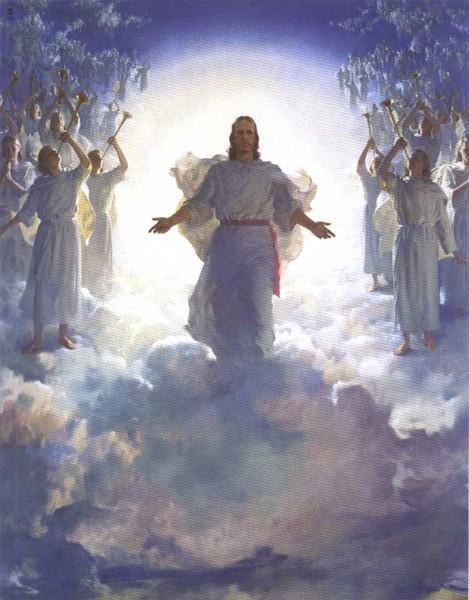 It's the last week of the liturgical year - next Sunday will be Advent Sunday, the start of a new cycle. As the liturgical year come to a close, the texts of the mass meditate on the end of the world.
In England, this Sunday is often called popularly "Stir Up" Sunday, from the first words of the Collect, Excita. There is a popular tradition of making Christmas puddings at this stage - stirring them up. Some of the other Advent collects also start with the word, Excita. So this is a season for stirring - both ourselves, and puddings.
Dicit Dóminus: Ego cógito cogitatiónes pacis, et non afflictiónis: invocábitis me, et ego exáudiam vos: et redúcam captivitátem vestram de cunctis locis. * Benedixísti, Dómine, terram tuam: avertísti captivitátem Jacob.
The Lord saith: I think thoughts of peace, and not of affliction: you shall call upon Me, and I will hear you; and I will bring back your captivity from all places. * Lord, Thou hast blessed Thy land: Thou hast turned away the captivity of Jacob.
(Jeremias 29:11-12,14 and Psalm 84:2 from the Introit of Mass)
Excita, quaesumus, Dómine, tuórum fidélium voluntátes: ut, divíni óperis fructum propénsius exsequéntes; pietátis tuae remédia majóra percípiant.
Stir up, we beseech Thee, O Lord, the wills of Thy faithful people, that they more earnestly seeking the fruit of divine service, may receive more abundantly healing gifts from Thy tender mercy.
(Collect)
 It's the last week of the liturgical year - next Sunday will be Advent Sunday, the start of a new cycle. As the liturgical year come to a close, the texts of the mass meditate on the end of the world.
The preparation for both Advents of Christ engrossed the Church's care during the Season of Advent: His first advent of mercy, and his second advent of justice. The Gospel of this Sunday was, in ancient times, an Advent Gospel, when that season had more than four Sundays. The collect bears the same character. The shortening of Advent made of them a prophetic reading and an appropriate prayer for the last Sunday of the year. The Apostle exhorts us to behave in a manner worthy of the Saviour and to bring forth all kinds of good works, in order that we may bear all trials with patience and joy.
The Gospel today, our Lord's sermon predicting both the fall of Jerusalem and the End of the World, is called the 'Eschatological Discourse.'
In England, this Sunday is often called popularly "Stir Up" Sunday, from the first words of the Collect, Excita. There is a popular tradition of making Christmas puddings at this stage - stirring them up. Some of the other Advent collects also start with the word, Excita. So this is a season for stirring - both ourselves, and puddings.
Dicit Dóminus: Ego cógito cogitatiónes pacis, et non afflictiónis: invocábitis me, et ego exáudiam vos: et redúcam captivitátem vestram de cunctis locis. * Benedixísti, Dómine, terram tuam: avertísti captivitátem Jacob.
The Lord saith: I think thoughts of peace, and not of affliction: you shall call upon Me, and I will hear you; and I will bring back your captivity from all places. * Lord, Thou hast blessed Thy land: Thou hast turned away the captivity of Jacob.
(Jeremias 29:11-12,14 and Psalm 84:2 from the Introit of Mass)
Excita, quaesumus, Dómine, tuórum fidélium voluntátes: ut, divíni óperis fructum propénsius exsequéntes; pietátis tuae remédia majóra percípiant.
Stir up, we beseech Thee, O Lord, the wills of Thy faithful people, that they more earnestly seeking the fruit of divine service, may receive more abundantly healing gifts from Thy tender mercy.
(Collect)
Sunday, 21 October 2018
22nd Sunday after Pentecost
22nd Sunday after Pentecost
As we have seen, the breviary lessons throughout October are taken from the Book of Machabees.
Judas Machabeus had heard very great things of the power of Rome, of far-off countries brought to subjection and many kings compelled to pay yearly tribute; and on the other hand, of the willingness of the Roman people to accede to requests made to them, and of their readiness to swear friendship with any nation that approached them for the purpose. Judas, therefore, decided to take the step of sending messengers to Rome itself, to seek the friendship and alliance of its people. This request was received favourably by the Senate, who later twice renewed the treaty of peace, first with Jonathas and then with Simon, who had succeeded their brother Judas Machabeus as a ruler. Soon however, the little kingdom was torn by civil war, brothers in hostile camps disputing the power between them. One of these thought fit to summon the Romans to his assistance; the invitation was accepted, and in 63 B.C. Pompey took Jerusalem.
It must be remembered that Rome never gave back what it had taken by force of arms. Palestine became and remained a Roman colony, the Senate appointing Herod, king of the Jews. This ruler, by way of pleasing the Jews richly rebuilt and enlarged the Temple at Jerusalem, and it was into this third Temple that our divine Lord made His triumphal entry later on.
From the moment of this conquest the Chosen People had to pay tribute to Rome, a fact which is alluded to in to-day's Gospel. This incident marks one of the last days of our Lord's life, and it was an occasion when the Master, in an answer full of heavenly wisdom, put to confusion His enemies, who from then on, were more than ever bent upon His destruction.
The necessity of paying tribute to Caesar was all the more odious to the Jews, since it went quite contrary to their instinct for universal supremacy, the promise of which Israel believed it had received. It followed that anyone who maintained the duty of payment had public opinion against him, while those who held the opposite view incurred the anger of the Roman authority in possession, and of those among the Jews who approved it and who formed the party of the Herodians. When therefore, the Pharisees thought to drive our Lord on to one or the other of the horns of this dilemma, it was in order to embroil Him either with the people or with the Roman power; on one count or the other they thought they could secure His arrest.
The better to attain their end, they sent Him a deputation of Jews consisting of members of both parties, of "their disciples with the Herodians", as St. Matthew puts it. To get an answer to their question, these men began by telling our Lord that they knew that He "taught the way of God in truth" without "regarding the person of men". And then they laid their snare before Him. "Is it lawful to give tribute to Caesar or not? But Jesus, knowing the malice that was in them, answers: "Why do ye tempt me, ye hypocrites?" And then, evading their attack with the greatest skill, He bade them show Him "the coin of the tribute" to force them, as He always did on these occasions, to answer their own question.
For when the Jews had offered him "a penny" of this money, He asks them: "Whose image and inscription is this?" They say to Him: "Caesar's." As a matter of fact, before the tribute could be paid it was a necessary preliminary to change the money of the country for coins bearing the image of the emperor; and since a coin is only of value in the country of the monarch whose image it bears, by this very exchange the Jews acknowledged that they were under Caesar's rule, and that they intended to pay tribute to him. "Render therefore to Caesar," says our Lord, "the things that are Caesar's", and then suddenly becoming the Judge of His hearers, He adds: "And to God the things that are God's", which means that since the soul of a man belongs to God who made it in His image, all the faculties ought to return to Him, in the sense of paying the tribute of their worship and service.
"We," says St. Augustine, "are the coins of God stamped with His image, and God demands the return of His coins as Caesar did the return of his." And St. Jerome adds: "Let us give to Caesar the money which bears his inscription, since we cannot do otherwise, but let us give ourselves freely and of our own accord to God, for what our soul bears is the glorious imprint of the face of a God and not the more or less majestic head of an emperor." Bossuet says: "This image will one day pass again through the hands and before the eyes of Jesus Christ, and some day He will look at us and say: 'Whose image and inscription is this?' And the very depth of our being will answer: 'God's'." "It is for Him that we were made and we must bear His stamp upon us. It had to be restored in baptism of which it is the effect and character. But what has become of the divine features which we ought to bear? Christian soul, may God's image be in your reason! But this you have drowned in drunkenness ; you have sunk it in the love of pleasure; you have surrendered it to ambition ; you have made it the slave of gold, which is a form of idolatry; you have sacrificed it to your appetites of which you have made a god; you have made of it an idol of vain glory, and instead of praising and blessing God day and night, it is itself constantly praised and admired."
And the divine Redeemer will say: "Amen, Amen, I know you not: you are not my work, no longer do see in you what I put there. You have chosen to form yourself in your own way: you are the work of pleasure and ambition: you are the work of the devil, whose works you have done, and whom, by taking him as your model, you have made your father. Go with him who knows you, and whose promptings you have followed; go to fire eternal which has been prepared for him. O just Judge! And where shall I be found? Shall I acknowledge myself, when my Creator has disowned me?" (Meditations sur l'Evangile. Thirty-ninth day.)
It is in this sense that we must interpret this Sunday's Gospel, one of the last of the ecclesiastical year and in which the Church reminds us of the end of the world. Thus the Epistle twice speaks of the coming of Christ as nigh at hand. St. Paul prays that " He who hath begun a good work in you, will perfect it unto the day of Christ Jesus," since the grace of final perseverance comes from Him alone. Again the apostle asks that our "charity may more and more abound in knowledge and in all understanding"; that we "may approve the better things"; that we "may be sincere and without offense unto the day of Christ " (Epistle). For in this dread moment: If the Lord "shall observe iniquities ... who shall endure it?" (Introit).
But the Lord is the "helper and protector" of them that hope in Him. (Alleluia), for there is propitiation with the God of Israel (Introit, Secret). And we shall ourselves experience this mercy if we are merciful to our neighbour. " How good and how pleasant a thing it is for brethren to dwell together in unity," says the Gradual. Especially must we be found in prayer in the hour of danger, for if we cry to the Lord, He will hear us. (Communion).
The prayer, in the highest degree social and fraternal, to which almighty God is especially attentive is the prayer of His bride the Church. He hears and answers her, like Assuerus the king, when as the Offertory reminds us, Esther his wife approached him that he might save God's people from death" (See the nineteenth Sunday after Pentecost).

Si iniquitátes observáveris, Dómine: Dómine, quis sustinébit? quia apud te propitiátio est, Deus Israël. * De profúndis clamávi ad te, Dómine: Dómine, exáudi vocem meam.
If Thou shalt observe iniquities, O Lord, who shall endure it? for with Thee is propitiation, O God of Israel. * Out of the depths I have cried to Thee, O Lord: Lord, hear my voice.
(Psalm 129:3-4,1-2 from the Introit of Mass).
Deus, refúgium nostrum et virtus: adésto piis Ecclésiae tuae précibus, auctor ipse pietátis, et praesta; ut, quod fidéliter pétimus, efficáciter consequámur.
O God, our refuge and strength, who art the author of all godliness; hear, we pray Thee, the devout prayers of Thy Church, and grant that what we ask confidently we may obtain effectually.
(Collect)
If Thou shalt observe iniquities, O Lord, who shall endure it? for with Thee is propitiation, O God of Israel. * Out of the depths I have cried to Thee, O Lord: Lord, hear my voice.
(Psalm 129:3-4,1-2 from the Introit of Mass).
Deus, refúgium nostrum et virtus: adésto piis Ecclésiae tuae précibus, auctor ipse pietátis, et praesta; ut, quod fidéliter pétimus, efficáciter consequámur.
O God, our refuge and strength, who art the author of all godliness; hear, we pray Thee, the devout prayers of Thy Church, and grant that what we ask confidently we may obtain effectually.
(Collect)
Continuation of the holy Gospel according to St. Matthew.
At that time, the Pharisees went and consulted among themselves, how to ensnare Jesus in His speech. And they send to Him their disciples, with the Herodians, saying: Master, we know that Thou art a true speaker, and teachest the way of God in truth, neither carest Thou for any man, for Thou dost not regard the person of the men. Tell us therefore, what dost Thou think? Is it lawful to give tribute to Caesar, or not? But Jesus knowing their wickedness, said: Why do you tempt Me, ye hypocrites ? Show Me the coin of the tribute. And they offered Him a penny. And Jesus saith to them : Whose image and superscription is this? They say to Him : Caesar's. Then He saith to them: Render therefore to Caesar the to God the things that are God's.
(St Matthew 22:15-21)
Ego clamavi, quoniam exaudisti me, Deus: inclina aurem tuam, et exaudi verba mea.
I have cried for Thou, O God, hast heard me: O incline Thy ear unto me, and hear my words.
(Communion, from Psalm 16:6)
Reddite ergo * quae sunt Caesaris, Caesari: et quae sunt Dei, Deo, alleluia.
Render therefore to Caesar, the things that are Caesar's and to God, the things that are God's, alleluia.
(Antiphon at the Magnificat, from St. Matt. 22:21)
Subscribe to:
Posts (Atom)