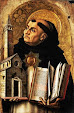
Consecration to the Immaculate Heart of Mary
(Pope Pius XII)
Queen of the Holy Rosary,
Help of the Christians,
Refuge of the human race,
Conqueress in God’s battlefields,
To You and to Your Immaculate Heart
In this tragic hour of human history
We entrust and consecrate ourselves,
And the Holy Church.
She is the Mystical Body of Your Jesus,
Suffering and bleeding in so many parts
And tormented in so many ways,
We consecrate to You the whole world torn by bitter strife
And consumed by the fire of hatred
The victim of its own wickedness.
Look with compassion to all material and moral destruction
To the suffering and fears of fathers and mothers
Of husbands and wives, of brother and sisters and innocent children.
Look at the many lives cut down in the flower of youth
So many bodies torn to pieces in brutal slaughter
So many souls tortured and troubled
And in danger of being lost eternally.
Oh, Mother of Mercy, obtain peace for us from God!
Obtain especially those graces, which can convert human hearts quickly.
Those graces, which can prepare, establish and insure peace.
Queen of Peace, pray for us;
Give the world at war the peace for which all are longing,
Peace in Truth, Justice and the Charity of Christ.
Give them peace of the arms and peace of mind,
That in tranquillity and order
The Kingdom of God may expand.
Grant Your protection to infidels
And to those still walking in the shadow of death;
Give them peace and permit that the sun of truth may raise upon them;
And that together with us
They may repeat before the Only Saviour of the World:
Glory to God in the highest
And peace on earth among men of good will.
Give peace to the people separated by error and schism,
Particularly those, who have special devotion to You
And among whom there was no home
Where Your venerable Icon was not honoured,
Though at present it may be hidden
In the hope for better days.
Bring them back to the One Fold of Christ,
Under the One True Shepherd.
Obtain peace and complete liberty for the Holy Church of God,
Check the spreading flood of neo-paganism,
Arouse within the faithful love of purity
The practice of Christian life and apostolic zeal,
So that the people who serve God,
May increase in merit and number.
All of humanity were once consecrated to the Heart of Your Son.
All our hopes rest in Him, Who is in all times
Sign and pledge of victory and salvation.
Forever we consecrate ourselves to You
And to Your Immaculate Heart,
Oh, Mother and Queen of the World!
May Your love and patronage hasten the victory of the Kingdom of God,
May all nations, at peace with each other and with God, proclaim You Blessed
And sing with You from one end of the earth to the other,
The eternal Magnificat of glory, love and gratitude
To the Heart of Jesus, in which alone,
They can find Truth, Life and Peace.
Tuesday, 1 August 2017
1st August, St Peter ad Vincula
St. Peter's Chains
The Church venerates on this day in the basilica of St. Peter "ad vincula " on Mount Esquiline at Rome, the chains with which the prince of the apostles was fettered (Collect, Epistle). This church where the Station is held on the Monday of the first week in Lent and on the Monday in the octave of Pentecost, was built over the baths of Trajan and restored towards the middle of the fifth century by the princess Eudoxia, whence the name of Eudoxian basilica sometimes given to it. It was dedicated on this day.
The date of August 1 was chosen so as to substitute a solemnity in honour of the apostle, Bishop of Rome and head of the Church (Alleluia, Gospel, Communion) for the pagan festival which used to be kept at Rome in honour of the Emperor Augustus.
[As a compliment to the Emperor Augustus they gave his name to the sixth month of the year formerly called Sextilis, for in old Rome the year began in March. The word August comes from Augustus as July from Julius Caesar. The following months kept their denominations of seventh (September), eighth (October), ninth (November) and tenth (December).]
The chains of St. Peter are in two portions, one having eleven links of lengthened shape to bind the hands, and the other twenty-three links, to the last of which are fixed two half circles to hold the neck. The popes used to send, as a rich present, a few particles of the filings of these chains enclosed in a golden key. They symbolize the power of the keys by which Peter unbinds from sin.
They were also put into rings or crosses to preserve from dangers (Collect). On the same day the Church honours St. Paul. There are preserved with St. Peter's chains four links of the chains which bound his arms during his captivity at Rome.
Nunc scio vere, quia misit Dominus Angelum suum: et eripuit me de manu Herodis, et de omni exspectatione plebis Judaeorum. * Domine, probasti me, et cognovisti me : tu cognovisti sessionem meam, et resurrectionem meam.
Now I know in very deed, that the Lord hath sent His angel, and hath delivered me out of the hand of Herod, and from all the expectation of the people of the Jews. * Lord, Thou hast proved me, and known me: Thou hast known my sitting down, and my rising up.
(Acts 12:9 and Psalm 138:1-2 from the introit of Mass)
Deus, qui beatum Petrum Apostolum, a vinculis absolutum, illaesum abire fecisti: nostrorum quaesumus, absolve vincula peccatorum; et omnia mala a nobis propitiatus exclude.
O God, who didst loose the blessed apostle Peter from his bonds and didst send him forth unharmed; loose, we pray Thee, the chains of our sins, and in Thy great mercy keep us from all evil.
(Collect)
Commemoration is made of St. Paul, by the Collects of the Mass of June 30th.
The Catholic Encyclopaedia on St Peter: http://www.newadvent.org/cathen/11744a.htm
1st August, The Holy Machabees, Martyrs
The Holy Machabees, Martyrs
The seven Machabees, who were brothers, were martyred with their mother under Antiochus Epiphanes. Their relics are kept at Rome in the church of St. Peter's Chains.
Clamaverunt justi, et Dominus exaudivit eos: et ex omnibus tribulationibus eorum liberavit eos. * Benedicam Dominum in omni tempore: semper laus ejus in ore meo.
The just cried, and the Lord heard them: and delivered them out of all their troubles.* I will bless the Lord at all times, His praise shall be always in my mouth.
(Psalm 33:18,2 from the Introit of Mass)
Fraterna nos, Domine, Martyrum tuorum corona laetificet: quae et fidei nostrae praebeat incrementa virtutum; et multiplici nos suffragio consoletur.
Be it ours, O Lord, to rejoice in the triumph of the holy brethren, Thy martyrs: on our faith may it bestow a crown of virtues, and may it be our comfort, that it has added many saints to the number of our advocates.
(Collect)
Here is the Breviary reading for the Holy Machabees. It is taken from Discourse 20 on the Machabees from St Gregory Nazianzen.
Sermon of St Gregory Nazianzen.
What of the Machabees? For this festal day is celebrated in their name by this present assembly. Although by many they are not held in honour, because they did not enter on the conflict after Christ, yet they are worthy to be honoured by all, because they showed courage and constancy in defence of the the laws and institutions of their fathers. For if they suffered martyrdom before the Passion of Christ, what would they have done, if they had suffered persecution after Christ, and if they had had, as a model to be imitated, His death, which He accepted for our salvation? For if they showed such and so great a courage, when they had no example before them, would they not have been even more courageous in the battle, if they had had that example before their eyes? There is even a certain mystical and hidden reason, which seems highly probable to me, and to all who love God, that none of them who suffered martydom before the coming of Christ could have attained to it without faith in Christ.
From the Catholic Encyclopaedia: http://www.newadvent.org/cathen/09493b.htm
Monday, 31 July 2017
31st July, St Ignatius Loyola, Confessor
St. Ignatius of Loyola, Confessor
Ignatius was born in Northern Spain, in 1491. He was the eleventh child of the Lord of Loyola, and at the age of fifteen, came as page to the court of king Ferdinand V.
His ardent and martial nature caused him to choose a military career. At the siege of Pamplona, he was severely wounded in the leg. During his long convalescence, in the absence of books of chivalry for which he had a passion, they gave him the lives of Jesus Christ and of the saints to read. This reading was for him a revelation. It dawned on him that the Church also has her army which, under the orders of the representative of Christ, fights to defend here below the sacred interests of the God of hosts.
[To the three religious vows St. Ignatius adds a fourth by which the members of the Society of Jesus bind themselves to go wherever the Pope will send them for the salvation of souls.]
He then laid down his sword at the feet of the Virgin, in the famous Benedictine Abbey at Montserrat, and his generous soul, once enamoured of worldly glory, now only longed for the greater glory of the King whom henceforth he will serve (Collect). Throughout the night of March 25, when the mystery of the Incarnation of the Word is solemnized, after confessing his sins he kept his knightly vigil, and the Mother of God armed him for Christ and the militant Church, His spouse. Soon he became General of the Society of Jesus, raised by Providence to combat Protestantism, Jansenism and returning paganism.
On the mountain the sons of Benedict, as a prelude to the liturgy in heaven, will continue the solemn celebration of the divine offices which Ignatius will recommend to the faithful, and whose sacred melodies he never heard without tears; and he, sacrificing himself to his mission, goes down into the plain to oppose with his valiant troops, the attacks of the hostile army whose violent onslaughts are always directed against his Institute (Epistle). Wherefore, to preserve in his sons the intense interior life required by the militant activity to which he devotes them, St. Ignatius subjects them to a strongly organized hierarchy and teaches them, in a masterly treatise highly approved of by the Church, his spiritual exercises which have sanctified thousands of souls. It has been affirmed that it was the practice of the Exercitatorium of the Benedictine Cisneros, abbot of Montserrat in 1500, which inspired him with the idea. Guided by grace, he realized it however at Manresa in a different and very personal way.
[The third of the eighteen rules made by St. Ignatius, as the crowning of the Spiritual Exercises, "that we may have the true sentiments of the orthodox Church," recommends to the faithful the Canticles of the Church, the psalms and the different canonial hours at their appointed times. And at the head of this book, in order to enable one to draw most profit from these Exercises, he rules in his twentieth note that he who can do so is to choose, for the duration of the Exercises, a dwelling whence he may easily go to the offices of Matins and Vespers, as well as to Mass " (Liturgical Year : July 31th, St. Ignatius of Loyola).]
[When he sent missionaries abroad he used to say to them: " Go, my brothers, Inflame the world and spread everywhere the fire which Jesus Christ came to kindle on the earth" (Communion).]
Ignatius was born in Northern Spain, in 1491. He was the eleventh child of the Lord of Loyola, and at the age of fifteen, came as page to the court of king Ferdinand V.
His ardent and martial nature caused him to choose a military career. At the siege of Pamplona, he was severely wounded in the leg. During his long convalescence, in the absence of books of chivalry for which he had a passion, they gave him the lives of Jesus Christ and of the saints to read. This reading was for him a revelation. It dawned on him that the Church also has her army which, under the orders of the representative of Christ, fights to defend here below the sacred interests of the God of hosts.
[To the three religious vows St. Ignatius adds a fourth by which the members of the Society of Jesus bind themselves to go wherever the Pope will send them for the salvation of souls.]
He then laid down his sword at the feet of the Virgin, in the famous Benedictine Abbey at Montserrat, and his generous soul, once enamoured of worldly glory, now only longed for the greater glory of the King whom henceforth he will serve (Collect). Throughout the night of March 25, when the mystery of the Incarnation of the Word is solemnized, after confessing his sins he kept his knightly vigil, and the Mother of God armed him for Christ and the militant Church, His spouse. Soon he became General of the Society of Jesus, raised by Providence to combat Protestantism, Jansenism and returning paganism.
On the mountain the sons of Benedict, as a prelude to the liturgy in heaven, will continue the solemn celebration of the divine offices which Ignatius will recommend to the faithful, and whose sacred melodies he never heard without tears; and he, sacrificing himself to his mission, goes down into the plain to oppose with his valiant troops, the attacks of the hostile army whose violent onslaughts are always directed against his Institute (Epistle). Wherefore, to preserve in his sons the intense interior life required by the militant activity to which he devotes them, St. Ignatius subjects them to a strongly organized hierarchy and teaches them, in a masterly treatise highly approved of by the Church, his spiritual exercises which have sanctified thousands of souls. It has been affirmed that it was the practice of the Exercitatorium of the Benedictine Cisneros, abbot of Montserrat in 1500, which inspired him with the idea. Guided by grace, he realized it however at Manresa in a different and very personal way.
[The third of the eighteen rules made by St. Ignatius, as the crowning of the Spiritual Exercises, "that we may have the true sentiments of the orthodox Church," recommends to the faithful the Canticles of the Church, the psalms and the different canonial hours at their appointed times. And at the head of this book, in order to enable one to draw most profit from these Exercises, he rules in his twentieth note that he who can do so is to choose, for the duration of the Exercises, a dwelling whence he may easily go to the offices of Matins and Vespers, as well as to Mass " (Liturgical Year : July 31th, St. Ignatius of Loyola).]
St. Ignatius arms his sons giving them for their shield the name of Jesus (Introit), for their breastplate the love of God which the Saviour came to enflame on earth (Communion) and whose symbol, the Sacred Heart, they gloriously bear in the folds of their flag; and for their sword, preaching, writing, teaching and all other forms of apostolate.
[When he sent missionaries abroad he used to say to them: " Go, my brothers, Inflame the world and spread everywhere the fire which Jesus Christ came to kindle on the earth" (Communion).]
It was in a Benedictine monastery in Spain that at the feast of the Annunciation, St. Ignatius first used these arms; in a chapel of the Benedictine Abbey of Montmartre that on the Feast of the Assumption in 1534 and later on at the altar of the Virgin of the Basilica of St. Paul-without-the-Walls, served by Benedictines, that was born the Society of Jesus, that noble chivalry of Christ, and lastly it was the Benedictine Pope Pius VII, a native of Cesena and a monk of its abbey, who in 1814 re-established it in all its rights. It is therefore God Himself who unites at the feet of the Blessed Virgin these two Orders which powerfully help the Church, for Martha and Mary, action and contemplation, both contribute, by different means, to the glory of God. The mottoes of these two religious families are alike: " In all things God be glorified! I.O.G.D." and: "To the greater glory of God! A.M.D.G."
Not to do anything except for the glory of God and to do everything for His greater glory is the perfection of holiness. It is the end of the creation, the end of man's elevation to a supernatural life, the end indeed of the evangelical precepts which cause generous souls to renounce, by vow, things that are lawful, in order to devote themselves more freely to the interests of God, and to render to Him in its entirety the accidental glory He had been deprived of by man's use of unlawful things.
Benedict has filled Europe with his missionary monks whose principal work is to praise God, and Ignatius with his priest-apostles (Gospel) who make manifest their interior life by their untiring activity.
From Montserrat, twelve monks with their Superior started with Christopher Columbus for the new Continent. From Lisbon, started Francis Xavier who first evangelized Japan and China. It is the same tree of the love of God which, on different branches, bears the same fruit.
On July 31, 1556, St. Ignatius died pronouncing the name of Jesus, and his society spread throughout the world. It numbers nowadays forty four provinces, and several hundreds of colleges.
[The Society of Jesus numbers 23 canonized saints, 142 beatified, 3 venerables and over 100 whose 29 causes are being discussed. It had in 1934 24,270 members : there were 24,000 at the time of the suppression. It has given to the Church illustrious prelates and a large number of apostles, learned men, educators and influential men, as is proved by the numerous congregations or religious associations which have imbibed the spirit of the Pounder, and by the many pious institutions under the direction of the sons of St. Ignatius. The Apostleship of Prayer for instance, is believed to number some 30 millions associates.]
[The Society of Jesus numbers 23 canonized saints, 142 beatified, 3 venerables and over 100 whose 29 causes are being discussed. It had in 1934 24,270 members : there were 24,000 at the time of the suppression. It has given to the Church illustrious prelates and a large number of apostles, learned men, educators and influential men, as is proved by the numerous congregations or religious associations which have imbibed the spirit of the Pounder, and by the many pious institutions under the direction of the sons of St. Ignatius. The Apostleship of Prayer for instance, is believed to number some 30 millions associates.]
May we obtain by the intercession of St. Ignatius so to be sanctified in truth (Secret) by the sacred mysteries of Mass and Communion, the source of all holiness, that with the help of this saint, we may after his example, so combat evil on earth, as to be crowned with him in heaven (Collect).
In nomine Jesu omne genu flectatur, caelestium, terrestrium, et infernorum: et omnis lingua confiteatur, quia Dominus Jesus Christus in gloria est Dei Patris. * Gloriabuntur in te omnes, qui diligunt nomen tuum: quoniam tu benedices justo.
In the name of Jesus let every knee bow, of things in heaven, on earth and under the earth: and let every tongue confess that the Lord Jesus Christ is in the glory of God the Father. * All they that love Thy name shall glory in Thee: for Thou wilt bless the just.
(From the Introit of Mass, Philemon 2:10-11 and Psalm 5:12-13.)
Deus, qui ad majorem tui nominis gloriam propagandam, novo per beatum Ignatium subsidio militantem Ecclesiam roborasti: concede; ut, ejus auxilio et imitatione certantes in terris, coronari cum ipso mereamur in caelis.
O God, who for the spreading of the greater glory of Thy name didst, by means of blessed Ignatius, strengthen Thy church militant with a new army; grant that by his aid and by his example we may so fight on earth as to become worthy to be crowned with him in heaven. Through our Lord.
(Collect)
From the Catholic Encyclopaedia: http://www.newadvent.org/cathen/07639c.htm
Sunday, 30 July 2017
30th July, SS. Abdon and Sennen, Martyrs
SS. Abdon and Sennen, Martyrs
Abdon and Sennen, born in Persia "were arrested and taken to Rome under the Emperor Decius. They were scourged with cords weighted with lead and beheaded" (Roman Martyrology). This was in the middle of the third century (A. D. 254).
Deus, qui sanctis tuis Abdon et Sennen ad hanc gloriam veniendi copiosum munus gratiae contulisti: da famulis tuis suorum veniam peccatorum; ut Sanctorum tuorum intercedentibus mentis, ab omnibus mereantur adversitatibus liberari.
O God, who didst endow Thy holy martyrs Abdon and Sennen with abundant gifts of grace that they might come to their present glory; forgive the sins of Thy servants, that the merits of Thy saints pleading on their behalf, they may deserve to be delivered from all adversity.
(Collect)
From the Catholic Encyclopaedia: http://www.newadvent.org/cathen/01032a.htm
Abdon and Sennen, born in Persia "were arrested and taken to Rome under the Emperor Decius. They were scourged with cords weighted with lead and beheaded" (Roman Martyrology). This was in the middle of the third century (A. D. 254).
Intret in conspectu tuo, Domine, gemitus compeditorum: redde vicinis nostris septuplum in sinu eorum: vindica sanguinem sanctorum tuorum, qui effusus est. * Deus, venerunt gentes in haereditatem tuam: polluerunt templum sanctum tuum: posuerunt Jerusalem in pomorum custodiam.
Let the sighing of the prisoners come in before Thee, O Lord; render to our neighbours sevenfold in their bosom; revenge the blood of Thy saints, which hath been shed. * O God, the heathens are come into Thy inheritance: they have defiled Thy holy temple: they have made Jerusalem as a place to keep fruit.
(Psalm 78:11-12,1 from the Introit of Mass)
Deus, qui sanctis tuis Abdon et Sennen ad hanc gloriam veniendi copiosum munus gratiae contulisti: da famulis tuis suorum veniam peccatorum; ut Sanctorum tuorum intercedentibus mentis, ab omnibus mereantur adversitatibus liberari.
O God, who didst endow Thy holy martyrs Abdon and Sennen with abundant gifts of grace that they might come to their present glory; forgive the sins of Thy servants, that the merits of Thy saints pleading on their behalf, they may deserve to be delivered from all adversity.
(Collect)
From the Catholic Encyclopaedia: http://www.newadvent.org/cathen/01032a.htm
Saturday, 29 July 2017
29th July, SS. Felix, Simplicius, Faustinus and Beatrice, martyrs
SS. Felix, Simplicius, Faustinus and Beatrice, martyrs
"Not to oppose error is to approve it; and not to defend truth is to suppress it, and, indeed, to neglect to confound evil men - when we can do it - is no less a sin than to encourage them." Pope St. Felix III.
The holy Pontiff Felix III is a Pope of the fourth century. He was martyred in Tuscany in the time of the Arians (A.D. 365). He is sometimes referred to as Pope Felix II - there was a Pope Felix II in the earlier part of the fourth century, who is usually regarded as an antipope, and this causes confusion in enumeration.
Simplicius and Faustinus, denounced as Christians to the persecutors, were put to death at Rome under Diocletian A.D. 304. Beatrice, their sister, was arrested and strangled in prison. Leo II placed the relics of these three martyrs in a church at Rome dedicated in their names.
Praesta, quaesumus, Domine: ut, sicut populus christianus Martyrum tuorum Felicis, Simplicii, Faustini et Beatricis temporali solemnitate congaudet, ita perfruatur aeterna: et, quod votis celebrat, comprehendat effectu.
Grant, we beseech Thee, O Lord, that as Christian people rejoice in being able to celebrate the temporal solemnity of Thy martyrs Felix, Simplicius, Faustinus and Beatrice, so they may also rejoice thereat in life eternal and receive the fruit of the sacrifice which they offer.
(Collect)
From the Catholic Encyclopaedia.
On St Felix: http://www.newadvent.org/cathen/06030b.htm
On the Antipope Felix II: http://www.newadvent.org/cathen/06030a.htm
On SS Simplicius, Faustinus and Beatrice: http://www.newadvent.org/cathen/14003a.htm
The holy Pontiff Felix III is a Pope of the fourth century. He was martyred in Tuscany in the time of the Arians (A.D. 365). He is sometimes referred to as Pope Felix II - there was a Pope Felix II in the earlier part of the fourth century, who is usually regarded as an antipope, and this causes confusion in enumeration.
Simplicius and Faustinus, denounced as Christians to the persecutors, were put to death at Rome under Diocletian A.D. 304. Beatrice, their sister, was arrested and strangled in prison. Leo II placed the relics of these three martyrs in a church at Rome dedicated in their names.
Sapientiam sanctorum narrent populi, et laudes eorum nuntiet Ecclesia: nomina autem eorum vivent in saeculum saeculi. * Exsultate, justi, in Domino: rectos decet collaudatio.
Let the people show forth the wisdom of the saints, and the Church declare their praise: and their names shall live unto generation and generation. * Rejoice in the Lord, O ye just : praise becometh the upright.
(Ecclesiasticus 44:15,14 and Psalm 32:1 from the introit of Mass)
Praesta, quaesumus, Domine: ut, sicut populus christianus Martyrum tuorum Felicis, Simplicii, Faustini et Beatricis temporali solemnitate congaudet, ita perfruatur aeterna: et, quod votis celebrat, comprehendat effectu.
Grant, we beseech Thee, O Lord, that as Christian people rejoice in being able to celebrate the temporal solemnity of Thy martyrs Felix, Simplicius, Faustinus and Beatrice, so they may also rejoice thereat in life eternal and receive the fruit of the sacrifice which they offer.
(Collect)
From the Catholic Encyclopaedia.
On St Felix: http://www.newadvent.org/cathen/06030b.htm
On the Antipope Felix II: http://www.newadvent.org/cathen/06030a.htm
On SS Simplicius, Faustinus and Beatrice: http://www.newadvent.org/cathen/14003a.htm
Sunday, 5 March 2017
1st Sunday in Lent
1st Sunday in Lent
Immediately after His baptism, our Lord began to prepare for His public life by a fast of forty days in the mountainous desert which stretches between Jericho and the mountains of Judea. It was there that He was tempted by Satan, who wished to discover whether the son of Mary was in reality the Son of God (Gospel).
As in the case of Adam, he adresses his first attack to the senses. Our Lord is hungry and the tempter suggests to Him that He should turn stones into bread. In the same way he tries, during these forty days, to make us give up our fasting and mortification. This is the concupiscence of the flesh.
The devil had promised our first parent that he should be as God. Now he takes our Lord to the pinnacle of the Temple and tries to induce Him to let Himself be carried by the angels through the air amidst the applause of the crowds below. Satan tempts us by pride, which is opposed to the spirit of prayer and meditation on God's word. This is the pride of life.
Finally, just as he had promised Adam a knowledge which like that of God Himself, should enable him to know all things, so Satan assures Jesus that he will make Him ruler over all created things if He will fall at his feet and worship him. In the same way the devil seeks to attach us to temporal goods, when we ought, by alms and works of charity, to be doing good to our neighbour. This is the concupiscence of the eyes or avance.
Since the "word of the Spirit is the word of God", our Lord made use of the ninetieth psalm against Satan, and this is the theme of the whole Mass and is found again and again in the office of the day. "His truth shall cover thee with a shield," says the psalmist. This psalm is, therefore, the ideal psalm for Lent as a special time of warfare against the devil. Again, the eleventh verse, "He hath given His angels charge over thee, to keep thee in all thy ways," recurs in Vespers like a refrain during the whole season. We find the entire psalm in the Tract, which reminds us of the old custom of singing psalms during certain parts of the Mass. Some of its verses make up the Introit with its verse, the Gradual, the Communion and the Offertory, which last was fonnerly composed, in to-day's mass, of three verses instead of one, following the order of the threefold temptation as recorded in the Gospel.
Side by side with this psalm the Epistle, certainly dating from the time of Saint Leo, sounds one of the characteristic notes of Lent. There Saint Paul borrows a text of Isaias: "In an accepted time have I heard thee, and in the day of salvation have I helped thee." "Behold," says the apostle, "now is the acceptable time, behold now is the day of salvation" (Epistle and first nocturn). On this Saint Leo comments: "Although there is no season of the year which is not rich in divine gifts and in which we by God's grace do not find immediate access to His mercy; nevertheless at this time when the return of the day on which we are redeemed summons us to fulfill all the duties of Christian piety, the souls of Christians must be stirred with more zeal for spiritual progress, and possessed of a very great confidence in almighty God. In this manner, with pure souls and bodies, shall we celebrate this mystery of the Lord's Passion, sublime beyond all others. True, we ought always to be in the divine presence, just as much as on the Easter feast. But because this spiritual vigour is the possession of only a few, while, on the one hand, the weakness of the flesh leads to any very severe observance being relaxed, and on the other, the varied occupations of this life share and divide our interest, it necessarily happens that the dust of the world soils the hearts even of religious themselves. This divine institution has been planned with great profit to our salvation in a manner that the exercises of these forty days may help us to regain the purity of our souls, making up, in a way, for the faults of the rest of the year, by fasting and pious deeds. However, we must be careful to give no one the least cause of complaint or scandal, so that our general behaviour may not be inconsistent with our fasting and penance.. For it is useless to reduce the nourishment of the body unless the soul departs from sin" (Second nocturn).
In this "acceptable time" and in these "days of salvation" let us purify ourselves with the Church {Collect), "in fastings, in chastity," by zeal in hearing and meditating on the word of God and by charity unfeigned (Epistle).
Invocabit me, et ego exaudiam eum: eripiam eum et glorificabo eum: longitudine dierum adimplebo eum. * Qui habitat in adjutorio Altissimi; in protectione Dei coeli commorabitur.
He shall cry to me, and I will hear him: I will deliver him, and I will glorify him: I will fill him with length of days. * He that dwelleth in the aid of the Most high, shall abide under the protection of the God of Heaven. (Psalm 90:15-16 from the Introit of Mass)
Deus, qui Ecclesiam tuam annua quadragesimali observatione purificas: praesta familiae tuae, ut quod a te obtinere abstinendo nititur, hoc bonis operibus exsequatur.
O God, who purifiest thy Church by the yearly observation of Lent: grant that what thy children endeavour to obtain of thee by abstinence, they may put in execution by good works.
(Collect)
A cunctis nos, quaesumus, Domine, mentis et corporis defende periculis: et intercedente beata et gloriosa semper Virgine Dei Genitrice Maria, cum beato Joseph, beatis Apostolis Tuis Petro et Paulo, atque beato N., et omnibus Sanctis, salutem nobis tribue benignus et pacem, ut destructis adversitatibus et erroribus universis, Ecclesia Tua secura Tibi serviat libertate.
Defend us, we beseech Thee, O Lord, from all dangers of mind and body; that through the intercession of the blessed and glorious ever Virgin Mary, Mother of God, together with blessed Joseph, Thy blessed apostles Peter and Paul, and blessed N., and all the saints, mercifully grant us safety and peace; that all adversities and errors being overcome, Thy Church may serve Thee in security and freedom.
(For the intercession of the Saints)
Omnipotens sempiterna Deus, qui vivorum dominaris simul et mortuorum, omniumque misereris quos tuos fide et opera futuros esse praenoscis: te supplices exoramus; ut, pro quibus effundere preces decrevimus, quosque vel praesens saeculum adhuc in carne retinet, vel futurum jam exutos corpore suscepit, intercedentibus omnibus Sanctis tuis, pietatis tuae clementia omnium delictorum suorum veniam consequantur.
O almighty and eternal God, who hast dominion over both the living and the dead, and hast mercy on all whom Thou foreknowest shall be Thine by faith and good works: we humbly beseech Thee that all for whom we have resolved to make supplication whether the present world still holds them in the flesh or the world to come has already received them out of the body, may, through the intercession of all Thy saints, obtain of Thy goodness and clemency pardon for all their sins.
(For the Living and the Dead)
Continuation of the Holy Gospel according to Matthew.
At that time, Jesus was led by the Spirit into the desert, to be tempted by the devil. And when he had fasted forty days and forty nights, he was afterwards hungry. And the tempter coming, said to him: If thou be the Son of God, command that these stones be made bread. But he answered and said: It is written, “Not by bread alone doth man live, but by every word that proceedeth out of the mouth of God.” Then the devil took him into the holy city, and set him upon a pinnacle of the temple, and said to him: If thou be the Son of God, cast thyself down: for it is written, “He hath given his Angels charge over thee, and in their hands shall they bear thee up, lest perhaps thou dash thy foot against a stone.” Jesus said to him: It is written again, “Thou shalt not tempt the Lord thy God.” Again the devil took him up into a very high mountain, and showed him all the kingdoms of the world, and the glory of them, and said to him: All these will I give thee, if falling down thou wilt! adore me. Then Jesus saith to him: Begone, Satan, for it is written: “The Lord thy God shalt thou adore, and him only shalt thou serve.” Then the devil left him; and behold Angels came and ministered to him.
(St Matthew 4)
Originally the forty days of penance were counted from this Sunday. The liturgical gathering of the "station" takes place to-day, as it was since the fourth century, at Saint John Lateran, which is the patriarchal basilica of the Bishops of Rome. At its first consecration, it was dedicated to "Saint Saviour," a name which calls to mind the Redemption accomplished by our Blessed Lord.
Immediately after His baptism, our Lord began to prepare for His public life by a fast of forty days in the mountainous desert which stretches between Jericho and the mountains of Judea. It was there that He was tempted by Satan, who wished to discover whether the son of Mary was in reality the Son of God (Gospel).
As in the case of Adam, he adresses his first attack to the senses. Our Lord is hungry and the tempter suggests to Him that He should turn stones into bread. In the same way he tries, during these forty days, to make us give up our fasting and mortification. This is the concupiscence of the flesh.
The devil had promised our first parent that he should be as God. Now he takes our Lord to the pinnacle of the Temple and tries to induce Him to let Himself be carried by the angels through the air amidst the applause of the crowds below. Satan tempts us by pride, which is opposed to the spirit of prayer and meditation on God's word. This is the pride of life.
Finally, just as he had promised Adam a knowledge which like that of God Himself, should enable him to know all things, so Satan assures Jesus that he will make Him ruler over all created things if He will fall at his feet and worship him. In the same way the devil seeks to attach us to temporal goods, when we ought, by alms and works of charity, to be doing good to our neighbour. This is the concupiscence of the eyes or avance.
Since the "word of the Spirit is the word of God", our Lord made use of the ninetieth psalm against Satan, and this is the theme of the whole Mass and is found again and again in the office of the day. "His truth shall cover thee with a shield," says the psalmist. This psalm is, therefore, the ideal psalm for Lent as a special time of warfare against the devil. Again, the eleventh verse, "He hath given His angels charge over thee, to keep thee in all thy ways," recurs in Vespers like a refrain during the whole season. We find the entire psalm in the Tract, which reminds us of the old custom of singing psalms during certain parts of the Mass. Some of its verses make up the Introit with its verse, the Gradual, the Communion and the Offertory, which last was fonnerly composed, in to-day's mass, of three verses instead of one, following the order of the threefold temptation as recorded in the Gospel.
Side by side with this psalm the Epistle, certainly dating from the time of Saint Leo, sounds one of the characteristic notes of Lent. There Saint Paul borrows a text of Isaias: "In an accepted time have I heard thee, and in the day of salvation have I helped thee." "Behold," says the apostle, "now is the acceptable time, behold now is the day of salvation" (Epistle and first nocturn). On this Saint Leo comments: "Although there is no season of the year which is not rich in divine gifts and in which we by God's grace do not find immediate access to His mercy; nevertheless at this time when the return of the day on which we are redeemed summons us to fulfill all the duties of Christian piety, the souls of Christians must be stirred with more zeal for spiritual progress, and possessed of a very great confidence in almighty God. In this manner, with pure souls and bodies, shall we celebrate this mystery of the Lord's Passion, sublime beyond all others. True, we ought always to be in the divine presence, just as much as on the Easter feast. But because this spiritual vigour is the possession of only a few, while, on the one hand, the weakness of the flesh leads to any very severe observance being relaxed, and on the other, the varied occupations of this life share and divide our interest, it necessarily happens that the dust of the world soils the hearts even of religious themselves. This divine institution has been planned with great profit to our salvation in a manner that the exercises of these forty days may help us to regain the purity of our souls, making up, in a way, for the faults of the rest of the year, by fasting and pious deeds. However, we must be careful to give no one the least cause of complaint or scandal, so that our general behaviour may not be inconsistent with our fasting and penance.. For it is useless to reduce the nourishment of the body unless the soul departs from sin" (Second nocturn).
In this "acceptable time" and in these "days of salvation" let us purify ourselves with the Church {Collect), "in fastings, in chastity," by zeal in hearing and meditating on the word of God and by charity unfeigned (Epistle).
Invocabit me, et ego exaudiam eum: eripiam eum et glorificabo eum: longitudine dierum adimplebo eum. * Qui habitat in adjutorio Altissimi; in protectione Dei coeli commorabitur.
He shall cry to me, and I will hear him: I will deliver him, and I will glorify him: I will fill him with length of days. * He that dwelleth in the aid of the Most high, shall abide under the protection of the God of Heaven. (Psalm 90:15-16 from the Introit of Mass)
Deus, qui Ecclesiam tuam annua quadragesimali observatione purificas: praesta familiae tuae, ut quod a te obtinere abstinendo nititur, hoc bonis operibus exsequatur.
O God, who purifiest thy Church by the yearly observation of Lent: grant that what thy children endeavour to obtain of thee by abstinence, they may put in execution by good works.
(Collect)
A cunctis nos, quaesumus, Domine, mentis et corporis defende periculis: et intercedente beata et gloriosa semper Virgine Dei Genitrice Maria, cum beato Joseph, beatis Apostolis Tuis Petro et Paulo, atque beato N., et omnibus Sanctis, salutem nobis tribue benignus et pacem, ut destructis adversitatibus et erroribus universis, Ecclesia Tua secura Tibi serviat libertate.
Defend us, we beseech Thee, O Lord, from all dangers of mind and body; that through the intercession of the blessed and glorious ever Virgin Mary, Mother of God, together with blessed Joseph, Thy blessed apostles Peter and Paul, and blessed N., and all the saints, mercifully grant us safety and peace; that all adversities and errors being overcome, Thy Church may serve Thee in security and freedom.
(For the intercession of the Saints)
Omnipotens sempiterna Deus, qui vivorum dominaris simul et mortuorum, omniumque misereris quos tuos fide et opera futuros esse praenoscis: te supplices exoramus; ut, pro quibus effundere preces decrevimus, quosque vel praesens saeculum adhuc in carne retinet, vel futurum jam exutos corpore suscepit, intercedentibus omnibus Sanctis tuis, pietatis tuae clementia omnium delictorum suorum veniam consequantur.
O almighty and eternal God, who hast dominion over both the living and the dead, and hast mercy on all whom Thou foreknowest shall be Thine by faith and good works: we humbly beseech Thee that all for whom we have resolved to make supplication whether the present world still holds them in the flesh or the world to come has already received them out of the body, may, through the intercession of all Thy saints, obtain of Thy goodness and clemency pardon for all their sins.
(For the Living and the Dead)
Continuation of the Holy Gospel according to Matthew.
At that time, Jesus was led by the Spirit into the desert, to be tempted by the devil. And when he had fasted forty days and forty nights, he was afterwards hungry. And the tempter coming, said to him: If thou be the Son of God, command that these stones be made bread. But he answered and said: It is written, “Not by bread alone doth man live, but by every word that proceedeth out of the mouth of God.” Then the devil took him into the holy city, and set him upon a pinnacle of the temple, and said to him: If thou be the Son of God, cast thyself down: for it is written, “He hath given his Angels charge over thee, and in their hands shall they bear thee up, lest perhaps thou dash thy foot against a stone.” Jesus said to him: It is written again, “Thou shalt not tempt the Lord thy God.” Again the devil took him up into a very high mountain, and showed him all the kingdoms of the world, and the glory of them, and said to him: All these will I give thee, if falling down thou wilt! adore me. Then Jesus saith to him: Begone, Satan, for it is written: “The Lord thy God shalt thou adore, and him only shalt thou serve.” Then the devil left him; and behold Angels came and ministered to him.
(St Matthew 4)
Subscribe to:
Posts (Atom)