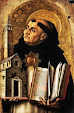
Hymn of Thanksgiving, attributed to St Ambrose.
Te Deum laudamus.
Te Dominum confitemur.
Te aeternum Patrem * omnis terra veneratur.
Tibi omnes Angeli, * tibi coeli et universae potestates.
Tibi Cherubim et Seraphim * incessabili voce proclamant:
Sanctus,
Sanctus,
Sanctus * Dominus Deus Sabaoth.
Pleni sunt coeli et terra * majestatis gloriae tuae.
Te gloriosus * Apostolorum chorus,
Te Prophetarum * laudabilis numerus,
Te Martyrum candidatus * laudat exercitus.
Te per orbem terrarum * sancta confitetur Ecclesia.
Patrem * immensae majestatis.
Venerandum tuum verum * et unicum Filium.
Sanctum quoque * paraclitum Spiritum.
Tu Rex gloriae * Christe.
Tu Patris * sempiternus es Filius.
Tu ad liberandum suscepturus hominem, * non horruisti Virginis uterum.
Tu, devicto mortis aculeo, * aperuisti credentibus regna coelorum.
Tu ad dexteram Dei sedes * in gloria Patris.
Judex crederis * esse venturus.
Te ergo, quaesumus, tuis famulis subveni, * quos pretioso sanguine redemisti.
Aeterna fac cum Sanctis tuis * in gloria numerari.
Salvum fac populum tuum, Domine, * et benedic haereditati tuae.
Et rege eos, * et extolle illos usque in aeternum.
Per singulos dies * benedicimus te.
Et laudamus nomen tuum in saeculum, * et in saeculum saeculi.
Dignare, Domine, die isto * sine peccato nos custodire.
Miserere nostri, Domine, * miserere nostri.
Fiat misericordia tua, Domine, super nos; * quemadmodum speravimus in te.
In te, Domine, speravi; * non confundar in aeternum.
We praise thee, O God: we acknowledge thee to be the Lord.
All the earth doth worship thee: the Father everlasting.
To thee all Angels cry aloud: the Heavens, and all the Powers therein.
To thee Cherubim and Seraphim: continually do cry,
Holy, Holy, Holy: Lord God of Sabaoth;
Heaven and earth are full of the Majesty: of thy glory.
The glorious company of the Apostles: praise thee.
The goodly fellowship of the Prophets: praise thee.
The noble army of Martyrs: praise thee.
The holy Church throughout all the world: doth acknowledge thee;
The Father: of an infinite Majesty;
Thine honourable, true: and only Son;
Also the Holy Ghost: the Comforter.
Thou art the King of Glory: O Christ.
Thou art the everlasting Son: of the Father.
When thou tookest upon thee to deliver man: thou didst not abhor the Virgin's womb.
When thou hadst overcome the sharpness of death: thou didst open the Kingdom of Heaven to all believers.
Thou sittest at the right hand of God: in the glory of the Father.
We believe that thou shalt come: to be our Judge.
We therefore pray thee, help thy servants: whom thou hast redeemed with thy precious blood.
Make them to be numbered with thy Saints: in glory everlasting.
O Lord, save thy people: and bless thine heritage.
Govern them: and lift them up for ever.
Day by day: we magnify thee;
And we worship thy Name: ever world without end.
Vouchsafe, O Lord: to keep us this day without sin.
O Lord, have mercy upon us: have mercy upon us.
O Lord, let thy mercy lighten upon us: as our trust is in thee.
O Lord, in thee have I trusted: let me never be confounded.
Saturday 31 December 2022

On the closing of another year: Prayer of St Augustine for Mercy
Prayer of St Augustine
 Ante oculos tuos, Domine, culpas nostras ferimus; et plagas quas accepimus, conferimus.
Si pensamus malum quod fecimus, minus est quod patimur, majus est quod meremur.
Gravius est quod commisimus, levius est quod toleramus.
Peccati poenam sentimus, et peccandi pertinaciam non vitamus.
In flagellis tuis infirmitas nostra teritur, et iniquitas non mutatur.
Mens aegra torquetur, et cervix non flectitur.
Vita in dolore suspirat, et in opere non se emendat.
Si expectas, non corrigimur; si vindicas, non duramus.
Confitemur in correctione quod egimus; obliviscimur post visitationem quod flevimus.
Si extenderis manum, facienda promittimus; si suspenderis gladium, promissa non solvimus.
Si ferias, clamamus ut parcas; si peperceris, iterum provocamus ut ferias.
Habes, Domine, confitentes reos; novimus quod nisi dimittas, recte nos perimus.
Praesta, Pater omnipotens, sine merito quod rogamus, qui fecisti ex nihilo qui te rogarent. Per Christum Dominum nostrum. Amen.
Lord, before Thine eyes we bring our sins, and with them we compare the stripes which we have received.
When we think of the evil we have done, little is that which we suffer, great that which we deserve.
Heaviest are our offences, lightest our burden.
We are afflicted by the punishment of our sin, yet we avoid not the obstinate desire of sinning.
The weakness of our flesh faints under Thy scourges, yet is not our iniquity changed.
The sick soul is sore tormented, yet is not the neck bent.
In pain our life sighs heavily; yet are its deeds in no wise amended.
If Thou waitest for us, we are not corrected; if Thou takest vengeance, we bear it not.
When we are corrected, we confess our shortcomings; after Thou hast visited us, we forget that which we bewailed.
If Thou stretchest forth Thy hand, we promise what we will do; if Thou delayest to draw Thy sword, we perform not our promises.
If Thou strikest us, we cry unto Thee to spare; if Thou sparest, we provoke Thee again to strike.
Lord, hear the confession of Thy guilty people; for we know well that unless Thou shouldest pardon, Thou dost righteously consume us.
Almighty Father, grant us that which though we pray we do not deserve to obtain; Thou who didst create men of nothing, that they might pray to Thee. Through Jesus Christ our Lord. Amen.
Tuesday 6 December 2022
Avancini: Vita et Doctrina Jesu Christi - Adventus I.
VITA ET DOCTRINA JESU CHRISTI
EX QUATUOR EVANGELISTIS COLLECTA, ET IN MEDITATIONUM MATERIAM, AD SINGULOS TOTIUS ANNI DIES DISTRIBUTA.
Monday 7 November 2022
Officum Parvum de Omnibus Sanctis - Little Office of All the Saints

Versus.
V. Laudate Dominum in Sanctis ejus:
R. Laudate Eum in firmamento virtutis ejus. (Ps 140)
Versus.
V. Domine, labia mea aperies,
R. Et os meum annuntiabit laudem tuam.
V. Deus, in adjutorium meum intende.
R. Domine, ad adjuvandum me festina.
Gloria Patri, et Filio, et Spiritui Sancto, sicut erat in principio et nunc et semper, et in saecula saeculorum, Amen. Alleluia.A Septuagesima usque ad Pascha, loco Alleluia, dicitur Laus tibi, Domine, Rex aeternae gloriae.
Hymnus.
Ad B.V. Reginam Sanctorum omnium.
O Mater: Ο senatus
Regina caelici!
Thronuique praeparatus
In Orbe numini!
Te nominat parentem
Creator omnium;
Te praedicat potentem
Caterva supplicum.
Te mater opto mille
Laudare vocibus,
Et mille, mille, mille
Amare cordibus.
Cor millies renatum
Si mater imperes,
Cor millies dicatum
O mater! auferes.
Antiphona.
Beatam te dicent omnes generationes: quia fecit tibi magna, qui potens est, et sanctum nomen ejus. (Luc. 1)V. Benedicta tu in mulieribus,
R. Et benedictus fructus ventris tui.
Oratio.
Oremus. Omnipotens aeterne Deus, qui beatissimam Virginem Mariam innumeris donis et gratiis exornatum in Matrem unigeniti Filii tui elegisti, et super omnes Angelos et Electos in regno tuo exaltasti: concede propitius; ut, qui eam in terris colimus, ejusdem patrocinio aeternam gloriam consequamur. Per eundem Dominum nostrum Jesum Christum Filium tuum, qui tecum vivit et regnat in unitate Spiritus Sancti, Deus, per omnia saecula saeculorum. Amen.
V. Domine exaudi orationem meam,
R. Et clamor meus ad te veniat.
V. Benedicamus Domino,
R. Deo gratias.
V. Et fidelium animae per misericordiam Dei requiescant in pace.
AD LAUDES
Versus.
V. Laudate Dominum in Sanctis ejus:
R. Laudate Eum in firmamento virtutis ejus. (Ps 140)
Versus.
V. Deus, in adjutorium meum intende.
R. Domine, ad adjuvandum me festina.
Gloria Patri, et Filio, et Spiritui Sancto, sicut erat in principio et nunc et semper, et in saecula saeculorum, Amen. Alleluia.A Septuagesima usque ad Pascha, loco Alleluia, dicitur Laus tibi, Domine, Rex aeternae gloriae.
Hymnus.
Ad Sanctos Angelos.
Candidae cohortes
Stellantis aetheris!
Promptae refertae fortes,
Et fata numinis.
Vox ore triplicato,
Ternoque carmine,
Ter sanctus ordinato
Cantatis agmine.
Ah posset esse mima
Vos nostra coelitum!
Ut summa vox et ima
Det suave canticum.
Favete mille corda,
Ut inde coelicae
Fiat vel una chorda
Aptanda musicae.
Antiphona.
In conspectu Angelorum psallam tibi Deus meus: adorabo ad templum sanctum tuum, et confitebor nomini tuo. (Ps. 137)V. Angelis suis Deus mandavit de te:
R. Ut custodiant in omnibus viis tuis.
Oratio.
Oremus. Omnipotens aeterne Deus, qui et majestatem tuam in numero et sanctitate Angelorum ostendis, et nobis eosdem Custodes et Magistros tribuisti: concede propitius; ut eorum exemplo tibi ita serviamus in terris, ut aeternum cum iisdem te laudare mereamus in coelis. Per Dominum nostrum Jesum Christum Filium tuum, qui tecum vivit et regnat in unitate Spiritus Sancti, Deus, per omnia saecula saeculorum. Amen.
V. Domine exaudi orationem meam,
R. Et clamor meus ad te veniat.
V. Benedicamus Domino,
R. Deo gratias.
V. Et fidelium animae per misericordiam Dei requiescant in pace.
AD PRIMAM.
Versus.
V. Laudate Dominum in Sanctis ejus:
R. Laudate Eum in firmamento virtutis ejus. (Ps 140)
Versus.
V. Deus, in adjutorium meum intende.
R. Domine, ad adjuvandum me festina.
Gloria Patri, et Filio, et Spiritui Sancto, sicut erat in principio et nunc et semper, et in saecula saeculorum, Amen. Alleluia.A Septuagesima usque ad Pascha, loco Alleluia, dicitur Laus tibi, Domine, Rex aeternae gloriae.
Hymnus.
Ad Sanctos Patriarchas.
Spectabiles senecta
Salvete Principes,
Quos vita mensque recta
Fecere coelites:
Vos terra Patriarchas
Ducesque nuncupat!
Sed rectias Monarchas
Vos aethra praedicat:
Spes vestra nascituro
Parente Virgine,
Ceu firmiore muro
Est vita surgere.
Et nostra spes in isto
Suspensa cardine,
Unique nixa Christo.
Stat firma Numine.
Antiphona.
In te speraverunt Patres nostri: speraverunt et liberasti eos; ad te clamaverunt, et salvi facti sunt. (Psal. 21:5)V. Notas mihi fecisti vias vitae.
R. Adimplebis me laetitia cum vultu tuo.
Oratio.
Oremus. Omnipotens aeterne Deus, qui Sanctos veteris testamenti Patriarchas proper constantem mandatorum tuorum observantiam, et fiducium in promissum Unigenitum tuum mundi Redemptorem, regni tui participes esse voluisti: concede propitius; ut simili constantia et fiducia in via praeceptorum tuorum persistamus, et demum ad conspectum Divinae majestatis tuae admitti mereamur. Per eundem Dominum nostrum Jesum Christum Filium tuum, qui tecum vivit et regnat in unitate Spiritus Sancti, Deus, per omnia saecula saeculorum. Amen.
V. Domine exaudi orationem meam,
R. Et clamor meus ad te veniat.
V. Benedicamus Domino,
R. Deo gratias.
V. Et fidelium animae per misericordiam Dei requiescant in pace.
AD TERTIAM.
Versus.
V. Laudate Dominum in Sanctis ejus:
R. Laudate Eum in firmamento virtutis ejus. (Ps 140)
Versus.
V. Deus, in adjutorium meum intende.
R. Domine, ad adjuvandum me festina.
Gloria Patri, et Filio, et Spiritui Sancto, sicut erat in principio et nunc et semper, et in saecula saeculorum, Amen. Alleluia.A Septuagesima usque ad Pascha, loco Alleluia, dicitur Laus tibi, Domine, Rex aeternae gloriae.
Hymnus.
Ad Sanctos Prophetas.
O Sancta turba Patrum
Quae mente provida
Producis in theatrum
Ventura tempora.
Arcana multa pandens
De prole Numinis.
Per dura multa scandens
Ad limen aetheris.
In Orbe vos labores
Pressere ferrei:
In axe nunc honores
Redduntur aurei.
Juvate: sic fideli
Sequemur orbita
Donec superna coeli
Intremus atria.
Antiphona.
Jerusalem, Jerusalem! quae occidis Prophetas, et lapidas eos, qui ad te missi sunt: quoties volui congregare filios tuos quemadmodum gallina congregat pullos suos sub alas, et noluisti? Matt. 23:37V. Da mercedem sustinentibus Te.
R. Ut Prophetae tui fideles inveniantur.
Oratio.
Oremus. Omnipotens sempiterne Deus! qui Prophetas tuos, sancti Spiritus gratia illuminatos et confortatos per plurimas hujus vitae adversitates ad aeternum gloriae tuae lumen perduxisti: concede propitius; ut nos eodem sancti tui Spiritus lumine illustrati, te Deum verum, et quem misisti Dominum Jesum Christum ita in terris agnoscamus, et colamus, ut in coelis clare intueri, et perfecte possidere mereamur. Per eundem Dominum nostrum Jesum Christum Filium tuum, qui tecum vivit et regnat in unitate Spiritus Sancti, Deus, per omnia saecula saeculorum. Amen.
V. Domine exaudi orationem meam,
R. Et clamor meus ad te veniat.
V. Benedicamus Domino,
R. Deo gratias.
V. Et fidelium animae per misericordiam Dei requiescant in pace.
AD SEXTAM.
Versus.
V. Laudate Dominum in Sanctis ejus:
R. Laudate Eum in firmamento virtutis ejus. (Ps 140)
Versus.
V. Deus, in adjutorium meum intende.
R. Domine, ad adjuvandum me festina.
Gloria Patri, et Filio, et Spiritui Sancto, sicut erat in principio et nunc et semper, et in saecula saeculorum, Amen. Alleluia.A Septuagesima usque ad Pascha, loco Alleluia, dicitur Laus tibi, Domine, Rex aeternae gloriae.
Hymnus.
De sanctis Apostolis.
O Ordo Nuntiorum!
O clara lumina!
Et Orbis, et polorum
Bis sena sidera,
Vobis ad astra clavis
Est certa tradita,
Ecclesiaeque navis
In Orbe credita.
Quae sacra seminastis
Ubique semina,
Et voce praedicastis
Factisque dogmata.
Ah! Impetrate lumen.
Ut corde compleam.
Ah! Invocate Numen,
Factis ut exprimam.
Antiphona.
Amen, dico vobis, quid vos, qui secuti estis me, in regeneratione, cum sederit Filium hominis in sede Majestatis suae, sedebitis et vos super sedes duodecim, judicantes duodecim tribus Israel. Matt. 19V. Nimis honorati sunt amici tui Deus:
R. Nimis confortatus est principatus eorum. Ps. 138:17
Oratio.
Oremus. Domine Jesu Christe! qui novam charitatis legem pectoribus nostris per beatos Apostolos tuos infudisti: horum nobis quaesumus, intercessione concede, ut suave hoc novae Legis tuae jugum prompta voluntate amplectamur, et opere perfecto expleamus Qui vivis et regnas cum Deo Patre in unitate Spiritus Sancti, Deus, per omnia saecula saeculorum. Amen.
V. Domine exaudi orationem meam,
R. Et clamor meus ad te veniat.
V. Benedicamus Domino,
R. Deo gratias.
V. Et fidelium animae per misericordiam Dei requiescant in pace.
AD NONAM.
Versus.
V. Laudate Dominum in Sanctis ejus:
R. Laudate Eum in firmamento virtutis ejus. (Ps 140)
Versus.
V. Deus, in adjutorium meum intende.
R. Domine, ad adjuvandum me festina.
Gloria Patri, et Filio, et Spiritui Sancto, sicut erat in principio et nunc et semper, et in saecula saeculorum, Amen. Alleluia.A Septuagesima usque ad Pascha, loco Alleluia, dicitur Laus tibi, Domine, Rex aeternae gloriae.
Hymnus.
Ad Sanctos Martyres.
O Turba laureata!
O agmen inclytum!
Christique purpurata
Caterva Martyrum!
Athletico duella
Aggressa robore,
Et gloriosa bella
Edocta vincere,
Da bella sic capessam:
Quae semper ingruunt,
Hostesque sic lacessam,
Qui semper impetunt.
Ut victor in superna
Theatra transferar,
Lauroque sempiterna
Tecum revinciar!
Antiphona.
Hi sunt, qui venerunt de tribulatione magna, et laverunt stolas suas; et dealbaverunt eas in Sanguine Agni. Ideo sunt ante Thronum Dei, et serviunt Ei die ac nocte in templo ejus. Apoc. 7:14V. Exultabunt Sancti in gloria:
R. Laetabuntur in cubilibus suis. Ps. 149:5
Oratio.
Oremus. Domine Jesu Christe! cujus acerbissimae Passionis et mortis meritis, omnes Martyres abundantem gratiam consecuti sunt ut pro confessione Nominis tui sanguinem suum fuderint: Concede propitius: ut et nos eorundem meritorum abundantia, et Martyrum tuorum intercessione, constanter fidem tuam profiteri et semper mortificationem tuam, o Jesu! in corpore nostro circumferre valeamus.
Qui vivis et regnas cum Deo Patre in unitate Spiritus Sancti, Deus, per omnia saecula saeculorum. Amen.
V. Domine exaudi orationem meam,
R. Et clamor meus ad te veniat.
V. Benedicamus Domino,
R. Deo gratias.
V. Et fidelium animae per misericordiam Dei requiescant in pace.
AD VESPERAS.
Versus.
V. Laudate Dominum in Sanctis ejus:
R. Laudate Eum in firmamento virtutis ejus. (Ps 140)
Versus.
V. Deus, in adjutorium meum intende.
R. Domine, ad adjuvandum me festina.
Gloria Patri, et Filio, et Spiritui Sancto, sicut erat in principio et nunc et semper, et in saecula saeculorum, Amen. Alleluia.A Septuagesima usque ad Pascha, loco Alleluia, dicitur Laus tibi, Domine, Rex aeternae gloriae.
Hymnus.
Ad Sanctos Confessores.
O Casibus probati
Heroes arduis!
Ad multa dura nati
In rebus asperis!
Vos mille jactitavit
Sors dura fluctibus,
Crebrisque cor probavit
Tentator ictibus:
Tulistis illa laeto,
Firmoque pectore.
Dum staret inquieto
Carina littore.
Cor impetrate forte,
Ut dura perferam,
Contentus esse forte
Quacunque gaudeam.
Antiphona.
Stabunt justi in magna constantia adversus eos, qui se angustiaverunt, et qui abstulerunt labores eorum. Sap. 5:1V. Ecce quomodo computati sunt inter filios Dei:
R. Et inter Sanctos sors illorum est. Sap. 5:6
Oratio.
Oremus. Domine Jesu Christe! cujus doctrina et exemplo Confessores tui mites et humiles facti et requiem animabus suis in hac et in altera vita consecuti sunt: da nobis gratiam, eorundem vestigiis devote ita hic insistere; ut demum ad aeternae quietis locum pervenire feliciter mereamur. Qui vivis et regnas cum Deo Patre in unitate Spiritus Sancti, Deus, per omnia saecula saeculorum. Amen.
V. Domine exaudi orationem meam,
R. Et clamor meus ad te veniat.
V. Benedicamus Domino,
R. Deo gratias.
V. Et fidelium animae per misericordiam Dei requiescant in pace.
AD COMPLETORIUM.
Versus.
V. Laudate Dominum in Sanctis ejus:
R. Laudate Eum in firmamento virtutis ejus. (Ps 140)
Versus.
V. Converte nos, Deus, salutaris noster,
V. Deus, in adjutorium meum intende.
R. Domine, ad adjuvandum me festina.
Gloria Patri, et Filio, et Spiritui Sancto, sicut erat in principio et nunc et semper, et in saecula saeculorum, Amen. Alleluia.A Septuagesima usque ad Pascha, loco Alleluia, dicitur Laus tibi, Domine, Rex aeternae gloriae.
Hymnus.
Ad Sanctas Virgines.
O digna lilietis
Caterva coelicis!
Quae vivis in viretis,
Sponsique pascuis.
Nix cana liliorum
Albente vellere,
Et lac eburque florum
Te vestit undique.
Tu carmen innocenti
Scis ore suadere,
Quod coelites silenti
Mirantur aethere.
Valete, vah! valete
Impura basia,
Mihi nec invidete
Haec casta gaudia.
Antiphona.
Cantabunt quasi canticum novum, et nemo poterat dicere canticum, nisi illa centum quadraginta quatuor millia, qui empti sunt de terra. Hi sunt, qui cum mulieribus non sunt coinquinati; Virgines enim sunt. Hi sequuntur Agnum, quocunque ierit. Apocal. 14:3V. Hi empti sunt ex hominibus primitiae Deo et Agno:
R. Et in ore eorum non est inventum mendacium. ibid.
Oratio.
Oremus. Domine Jesu Christe Sponse et singularis Amator castarum animarum, quas prae caeteris Sanctis in regno tuo peculiari laureola condecoras: largire nobis gratiam; ut earundem vestigiis insistentes eadem quoque praemia consequamur. Qui vivis et regnas cum Deo Patre in unitate Spiritus Sancti, Deus, per omnia saecula saeculorum. Amen.
V. Domine exaudi orationem meam,
R. Et clamor meus ad te veniat.
V. Benedicamus Domino,
R. Deo gratias.
V. Et fidelium animae per misericordiam Dei requiescant in pace.
Oblatio.
O Coeli Quirites
Tonantis aulici,
Post bella postque lites
In axe fulgidi!
Clientuli precantis
Ne vota spernite,
Servique vos vocantis
Ne verba temnite.
Adesto, quando vitae
Est lapsa clepsydra,
Ad vota tunc venite,
O viva sydera!
Tunc transitum parate
Ad celsa limina,
Terrisque me vocate
Ad vestra gaudia.
Source - Coeleste Palmetum, Coloniae Agrippinae, 1782
Thursday 18 August 2022
Officum Parvum pro Defunctis - Little Office for the Dead

Versus.
Domine Jesu Christe, Rex gloriae, libera animas omnium fidelium defunctorum de poenis inferni, et de profundo lacu: libera eos de ore leonis, ne absorbeat eas tartarus, ne candant in obscurum; sed signifer Sanctus Michael repraesentet eas in lucem sanctam, quam olim Abrahae promisisti, et semini ejus.Versus.
Fidelium animae per misericordiam Dei requiescant in pace.
Hymnus.
O vos fideles animae
In Christo defunctorum;
Sed merito prohibitae
Ab auditu coelorum:
Quam velim vobis dexteram,
Opemque praesentare;
Ut hinc ad coeli gloriam
Possitis evolare.
Antiphona.
Illuminare his, qui in tenebris et umbra mortis sedent, ad dirigendos pedes eorum in viam pacis.
V. Si iniquitates observaveris Domine,
R. Domine, quis sustinebit.
Oratio.
Oremus. Fidelium Deus, omnium Conditor et Redemptor, animabus famulorum, famularumque tuarum remissionem cunctorum tribue peccatorum: ut indulgentiam, quam semper optaverunt, piis supplicationibus consequantur. Qui vivis et regnas in saecula saeculorum. Amen.
AD PRIMAM.
Versus.
Fidelium animae per misericordiam Dei requiescant in pace.
Hymnus.
O Magne Pater!
Nomine misericordiarum,
Facturas tuas respice,
Sed immemor irarum:
Poenas sunt quidem meritae,
Te tamen non negarunt
Hic locus fit clementiae:
Ignosce, quod peccarunt.
Antiphona.
Illuminare his, qui in tenebris et umbra mortis sedent, ad dirigendos pedes eorum in viam pacis.
V. Si iniquitates observaveris Domine,
R. Domine, quis sustinebit.
Oratio.
Oremus. Fidelium Deus, omnium Conditor et Redemptor, animabus famulorum, famularumque tuarum remissionem cunctorum tribue peccatorum: ut indulgentiam, quam semper optaverunt, piis supplicationibus consequantur. Qui vivis et regnas in saecula saeculorum. Amen.
AD TERTIAM.
Versus.
Fidelium animae per misericordiam Dei requiescant in pace.
Hymnus.
O Jesu clementissime!
O optime Salvator!
Tuo redemptis Sanguine
Sis mitis liberator:
Indulge te amantibus
Tuam benignitatem.
Poenamque deprecantibus
Ostende bonitatem.
Antiphona.
Illuminare his, qui in tenebris et umbra mortis sedent, ad dirigendos pedes eorum in viam pacis.
V. Si iniquitates observaveris Domine,
R. Domine, quis sustinebit.
Oratio.
Oremus. Fidelium Deus, omnium Conditor et Redemptor, animabus famulorum, famularumque tuarum remissionem cunctorum tribue peccatorum: ut indulgentiam, quam semper optaverunt, piis supplicationibus consequantur. Qui vivis et regnas in saecula saeculorum. Amen.
AD SEXTAM.
Versus.
Fidelium animae per misericordiam Dei requiescant in pace.
Hymnus.
O Consolator optime!
O dulcis Paraclite!
Hos tu defertos, respice,
Et indigos quiete:
In aestu hoc temperiem,
Veraeque pacis bona;
Et post laborem requiem
Aeternam iis dona.
Antiphona.
Illuminare his, qui in tenebris et umbra mortis sedent, ad dirigendos pedes eorum in viam pacis.
V. Si iniquitates observaveris Domine,
R. Domine, quis sustinebit.
Oratio.
Oremus. Fidelium Deus, omnium Conditor et Redemptor, animabus famulorum, famularumque tuarum remissionem cunctorum tribue peccatorum: ut indulgentiam, quam semper optaverunt, piis supplicationibus consequantur. Qui vivis et regnas in saecula saeculorum. Amen.
AD NONAM.
Versus.
Fidelium animae per misericordiam Dei requiescant in pace.
Hymnus.
O Dulcis Mater gratiae!
Solatrix afflictorum,
Vim cohibe justitiae.
Rigorem tormentorum.
Flammam voracem tempera.
Et mitiga dolores:
Incendium refrigera,
Et fini hos angores.
Antiphona.
Illuminare his, qui in tenebris et umbra mortis sedent, ad dirigendos pedes eorum in viam pacis.
V. Si iniquitates observaveris Domine,
R. Domine, quis sustinebit.
Oratio.
Oremus. Fidelium Deus, omnium Conditor et Redemptor, animabus famulorum, famularumque tuarum remissionem cunctorum tribue peccatorum: ut indulgentiam, quam semper optaverunt, piis supplicationibus consequantur. Qui vivis et regnas in saecula saeculorum. Amen.
AD VESPERAS.
Versus.
Fidelium animae per misericordiam Dei requiescant in pace.
Hymnus.
Vos tutelares Genii
Quorum sunt hi clientes.
Quantum vestri subsidii
Sunt ipsi indigentes!
Piorum desideria
Et vestrum excitate:
Optata refrigeria
Clientibus curate.
Antiphona.
Illuminare his, qui in tenebris et umbra mortis sedent, ad dirigendos pedes eorum in viam pacis.
V. Si iniquitates observaveris Domine,
R. Domine, quis sustinebit.
Oratio.
Oremus. Fidelium Deus, omnium Conditor et Redemptor, animabus famulorum, famularumque tuarum remissionem cunctorum tribue peccatorum: ut indulgentiam, quam semper optaverunt, piis supplicationibus consequantur. Qui vivis et regnas in saecula saeculorum. Amen.
AD COMPLETORIUM.
Versus.
Fidelium animae per misericordiam Dei requiescant in pace.
Hymnus.
Vos omnes quoque Coelites,
In regno triumphante,
Solamini nos milites
In flamma hac purgante,
Vestris in terris socii
Cum fuerint laborum!
Nunc et beati otii
Sors vocat et bonorum.
Antiphona.
Illuminare his, qui in tenebris et umbra mortis sedent, ad dirigendos pedes eorum in viam pacis.
V. Si iniquitates observaveris Domine,
R. Domine, quis sustinebit.
Oratio.
Oremus. Fidelium Deus, omnium Conditor et Redemptor, animabus famulorum, famularumque tuarum remissionem cunctorum tribue peccatorum: ut indulgentiam, quam semper optaverunt, piis supplicationibus consequantur. Qui vivis et regnas in saecula saeculorum. Amen.
Oblatio.
O fons misericordiae,
Summaeque bonitatis!
Prosint piorum lachrymae
Hoc igne cruciatis.
Locum tuae justitiae
Agnoscimus infernum,
Laudes tuae clementiae
Hi cantent in aeternum.
Requiem aeternam dona eis Domine.
V. Requiescant in pace:R. Amen.
Adhortatio.
Quot usquam estis Numini et Superis devoti,
Audite, quid rogemini, ut sitis Dei toti:
Hic charitatis viscera fraternae explicate:
Vices rependet misera haec turba liberata.
Source - Coeleste Palmetum, Coloniae Agrippinae, 1782
Wednesday 17 August 2022
Officium Parvum de Septem Doloribus Beatae Virginis - Little Office of the Virgin of Sorrows
.jpg)
Primus Dolor: ex Simeonis vaticinio. (Luc 2)
Ave Maria, gratia plena, Dominus tecum. Benedicta tu in mulieribus, et benedictus fructus ventris tui, Iesus. Sancta Maria, Mater Dei, ora pro nobis peccatoribus, nunc, et in hora mortis nostrae. Amen.
Versus.
V. Domine, labia mea aperies,
R. Et os meum annuntiabit laudem tuam.
V. Deus, in adjutorium meum intende.
R. Domine, ad adjuvandum me festina.
Gloria Patri, et Filio, et Spiritui Sancto, sicut erat in principio et nunc et semper, et in saecula saeculorum, Amen. Alleluia.A Septuagesima usque ad Pascha, loco Alleluia, dicitur Laus tibi, Domine, Rex aeternae gloriae.
Hymnus
Ave dulcis, Mater Christi!
Quae cor tuum gladio
Transfigendum audis, tristi
Senis vaticinio:
Tanti memor fac doloris,
Mihi sis praesidio,
Ut post vallem hanc moeroris,
Caeli reddar gaudio.
Antiphona.
Cui comparabo te? Vel cui assimilabo te, filia Jerusalem? Cui exaequabo te, et consolabor Virgo, filia Sion? Magna est enim velut mare contritio tua. (Thren. 2:13)
V. Tuam ipsius animam doloris gladius pertransivit:
R. Ut releventur ex multis cordibus cogitationes. (Luc. 2:35)
Oratio.
Oremus. Interveniat pro nobis, quaesumus, Domine Jesu Christe, nunc et in hora mortis nostrae apud tuam clementiam Beata Virgo Maria Mater tua, cujus sacratissimam animam in hora tuae Passionis doloris gladius pertransivit. Per te, Jesu Christe, Salvator mundi, qui cum Patre et Spiritu Sancto vivis et regnas per omnia saecula saeculorum. Amen.
AD PRIMAM.
Secundus Dolor: ex fuga in Aegyptum. (Matt 2)
Ave Maria, gratia plena, Dominus tecum. Benedicta tu in mulieribus, et benedictus fructus ventris tui, Iesus. Sancta Maria, Mater Dei, ora pro nobis peccatoribus, nunc, et in hora mortis nostrae. Amen.
Versus.
V. Deus, in adjutorium meum intende.
R. Domine, ad adjuvandum me festina.
Gloria Patri, et Filio, et Spiritui Sancto, sicut erat in principio et nunc et semper, et in saecula saeculorum, Amen. Alleluia.A Septuagesima usque ad Pascha, loco Alleluia, dicitur Laus tibi, Domine, Rex aeternae gloriae.
Hymnus.
Ave dulcis Mater Christi
Quae prae Regis furia
Saeviente, corde tristi,
Fugis exul patria:
O Regina beatorum,
Nostri spes exilii,
Fac infractus vi malorum
Fiam consors Filii.
Ant. Vide, Domine, quoniam tribulor: conturbatus est venter meus: subversum est cor meum in memetipsa; quoniam amaritudine plena sum: foris interfecit gladius, et domi mors similis est. (Thren 1:20)
V. Domine ante te omne desiderium meum.
R. Et gemitus meus a te non est absconditus.
Oratio.
Oremus. Interveniat pro nobis, quaesumus, Domine Iesu Christe, nunc et in hora mortis nostrae apud tuam clementiam Beata Virgo Maria Mater tua, cuius sacratissimam animam in hora tuae Passionis doloris gladius pertransivit. Per te, Jesu Christe, Salvator mundi, qui cum Patre et Spiritu Sancto vivis et regnas per omnia saecula saeculorum. Amen.
AD TERTIAM.
Tertius Dolor: ex amisso duodenni Filio. (Luc 2)
Ave Maria, gratia plena, Dominus tecum. Benedicta tu in mulieribus, et benedictus fructus ventris tui, Iesus. Sancta Maria, Mater Dei, ora pro nobis peccatoribus, nunc, et in hora mortis nostrae. Amen.
Versus.
V. Deus, in adjutorium meum intende.
R. Domine, ad adjuvandum me festina.
Gloria Patri, et Filio, et Spiritui Sancto, sicut erat in principio et nunc et semper, et in saecula saeculorum, Amen. Alleluia.A Septuagesima usque ad Pascha, loco Alleluia, dicitur Laus tibi, Domine, Rex aeternae gloriae.
Hymnus.
Ave dulcis Mater Christi,
Natum lugens inclytum:
O quam tristis quaesivisti
Triduo jam perditum:
Hujus memor o doloris!
Christum fac inveniam,
Et inventum per amoris
Nexum semper teneam.
Ant. Plorans ploravit in nocte et lachrimae ejus in maxillis ejus, non est qui consoletur eam ex omnibus charis eius. (Thren. 1:2)
V. Posuisti me desolatam.
R. Tota die moerore confectam. (Thren. 1:13)
Oratio.
Oremus. Interveniat pro nobis, quaesumus, Domine Jesu Christe, nunc et in hora mortis nostrae apud tuam clementiam Beata Virgo Maria Mater tua, cujus sacratissimam animam in hora tuae Passionis doloris gladius pertransivit. Per te, Jesu Christe, Salvator mundi, qui cum Patre et Spiritu Sancto vivis et regnas per omnia saecula saeculorum. Amen.
AD SEXTAM.
Quartus Dolor: ex captivitate, flagellatione, coronatione, et bajulatione Crucis Christi. (Luc)
Ave Maria, gratia plena, Dominus tecum. Benedicta tu in mulieribus, et benedictus fructus ventris tui, Jesus. Sancta Maria, Mater Dei, ora pro nobis peccatoribus, nunc, et in hora mortis nostrae. Amen.
Versus.
V. Deus, in adjutorium meum intende.
R. Domine, ad adjuvandum me festina.
Gloria Patri, et Filio, et Spiritui Sancto, sicut erat in principio et nunc et semper, et in saecula saeculorum, Amen. Alleluia.A Septuagesima usque ad Pascha, loco Alleluia, dicitur Laus tibi, Domine, Rex aeternae gloriae.
Hymnus.
Ave dulcis Mater Christi,
Quae dilectum Filium
Capi, caedi, flens vidisti,
Manibus crudelium:
O per poenas Patientis,
Nobis fit impunitas:
Per amorem Condolentis
Matris crescat charitas!
Ant. Vide Domine afflictionem meam; quoniam erectus est inimicus. Manum suam misit hostis ad omnia desiderabilia mea. (Thren. 1:9-10)
V. Quis dabit capiti meo aquam, et oculis meis fontem lacrimarum.
R. Et plorabo die ac nocte.
Oratio.
Oremus. Interveniat pro nobis, quaesumus, Domine Jesu Christe, nunc et in hora mortis nostrae apud tuam clementiam Beata Virgo Maria Mater tua, cujus sacratissimam animam in hora tuae Passionis doloris gladius pertransivit. Per te, Jesu Christe, Salvator mundi, qui cum Patre et Spiritu Sancto vivis et regnas per omnia saecula saeculorum. Amen.
AD NONAM.
Quintus Dolor: ex Crucifixione. (Jn 19)
Ave Maria, gratia plena, Dominus tecum. Benedicta tu in mulieribus, et benedictus fructus ventris tui, Jesus. Sancta Maria, Mater Dei, ora pro nobis peccatoribus, nunc, et in hora mortis nostrae. Amen.
Versus.
V. Deus, in adjutorium meum intende.
R. Domine, ad adjuvandum me festina.
Gloria Patri, et Filio, et Spiritui Sancto, sicut erat in principio et nunc et semper, et in saecula saeculorum, Amen. Alleluia.A Septuagesima usque ad Pascha, loco Alleluia, dicitur Laus tibi, Domine, Rex aeternae gloriae.
Hymnus.
Ave dulcis Mater Christi,
Quae sub Crucis arbore
Gemens, Natum morte tristi,
Vides, heu! succumbere,
O per Ensem hunc doloris
Qui tunc scidit animam
Fac me firmet vis amoris
Mortis ad victoriam.
Ant. O vos omnes qui transitis per viam, attendite et videte, si est dolor, sicut dolor meus. (Thren. 1:12)
V. Plauserunt super te manibus omnes transeuntes per viam.
R. Sibilaverunt et moverunt caput suum super filiam Jerusalem.
Oratio.
Oremus. Interveniat pro nobis, quaesumus, Domine Jesu Christe nunc et in hora mortis nostrae apud tuam clementiam Beata Virgo Maria Mater tua, cujus sacratissimam animam in hora tuae Passionis doloris gladius pertransivit. Per te, Jesu Christe, Salvator mundi, qui cum Patre et Spiritu Sancto vivis et regnas per omnia saecula saeculorum. Amen.
AD VESPERAS.
Sextus Dolor: ex Corporis e Cruce sublatione. (Jn 19)
Ave Maria, gratia plena, Dominus tecum. Benedicta tu in mulieribus, et benedictus fructus ventris tui, Jesus. Sancta Maria, Mater Dei, ora pro nobis peccatoribus, nunc, et in hora mortis nostrae. Amen.
Versus.
V. Deus, in adjutorium meum intende.
R. Domine, ad adjuvandum me festina.
Gloria Patri, et Filio, et Spiritui Sancto, sicut erat in principio et nunc et semper, et in saecula saeculorum, Amen. Alleluia.A Septuagesima usque ad Pascha, loco Alleluia, dicitur Laus tibi, Domine, Rex aeternae gloriae.
Hymnus.
Ave dulcis Mater Christi,
Quae de Cruce mortuum
Ulnis natum suscepisti,
Madens unda fletuum.
Eja praestet vis doloris,
Mater plena gratiae,
Ut supremis server horis
Gremio clementiae.
Ant. Ne vocetis me Noemi (id est pulchram) sed vocate me Mara (id est amaram) quia amaritudine valde me replevit Omnipotens. (Ruth 1:20)
V. Fasciculus myrrhae dilectus meus mihi.
R. Inter ubera mea commorabitur. (Cant. 1)
Oratio.
Oremus. Interveniat pro nobis, quaesumus, Domine Jesu Christe, nunc et in hora mortis nostrae apud tuam clementiam Beata Virgo Maria Mater tua, cujus sacratissimam animam in hora tuae Passionis doloris gladius pertransivit. Per te, Jesu Christe, Salvator mundi, qui cum Patre et Spiritu Sancto vivis et regnas per omnia saecula saeculorum. Amen.
AD COMPLETORIUM.
Septimus Dolor: ex Sepultura. (Jn 19)
Ave Maria, gratia plena, Dominus tecum. Benedicta tu in mulieribus, et benedictus fructus ventris tui, Jesus. Sancta Maria, Mater Dei, ora pro nobis peccatoribus, nunc, et in hora mortis nostrae. Amen.
Versus.
V. Converte nos, Deus, salutaris noster,
V. Deus, in adjutorium meum intende.
R. Domine, ad adjuvandum me festina.
Gloria Patri, et Filio, et Spiritui Sancto, sicut erat in principio et nunc et semper, et in saecula saeculorum, Amen. Alleluia.A Septuagesima usque ad Pascha, loco Alleluia, dicitur Laus tibi, Domine, Rex aeternae gloriae.
Hymnus.
Ave dulcis Mater Christi,
Quae sepulchro conditum
Plangis Natum, heu quam tristi
Mente volvens obitum!
In virtute tot dolorum,
Quos tulisti fortiter,
Omnem contra vim malorum,
Stare nos viriliter:
Demum sorte beatorum
Fac gaudere jugiter.
Ant. Idcirco ego plorans et oculus meus deducens aquas: quia longe factus est a me consolator convertens animam meam. (Lam 1:16)
V. Defecerunt prae lacrimis oculi mei.
R. Conturbata sunt viscera mea. (Lam 2:11)
Oratio.
Oremus. Interveniat pro nobis, quaesumus, Domine Jesu Christe nunc et in hora mortis nostrae apud tuam clementiam Beata Virgo Maria Mater tua, cujus sacratissimam animam in hora tuae Passionis doloris gladius pertransivit. Per te, Jesu Christe, Salvator mundi, qui cum Patre et Spiritu Sancto vivis et regnas per omnia saecula saeculorum. Amen.
Commendatio.
Has Horas canonicas cum devotione
Tibi Virgo recolo pia ratione;Ut materni pectoris ex compassione,
Mihi sis auxilio mortis in agone. Amen.
Source - Coeleste Palmetum, Coloniae Agrippinae, 1782
Tuesday 16 August 2022
Officium Parvum de Immaculatae Conceptione Beatae Mariae - Little Office of the Immaculate Conception of Our Lady

AD MATUTINUM
Versus.
Eja, mea labia, nunc annuntiate, laudes et praeconia Virginis beatae.
Versus.
V. Domina, in adjutorium meum intende.
R. Me de manu hostium potenter defende.
Gloria Patri, et Filio, et Spiritui Sancto, sicut erat in principio et nunc et semper, et in saecula saeculorum, Amen. Alleluia.
A Septuagesima usque ad Pascha, loco Alleluia, dicitur Laus tibi, Domine, Rex aeternae gloriae.
Hymnus.
Salve, mundi Domina,
Caelorum Regina:
Salve, Virgo virginum,
Stella matutina.
Salve, plena gratia,
Clara luce divina.
Mundi in auxilium,
Domina, festina.
Ab aeterno Dominus
Te praeordinavit
Matrem unigeniti
Verbi, quo creavit.
Terram, pontum, aethera,
Te pulchram ornavit
Sibi Sponsam, quae
In Adam non peccavit.
V. Elegit eam Deus, et praeelegit eam.
R. In tabernaculo suo habitare fecit eam.
Oratio.
V. Domina, protege orationem meam.
R. Et clamor meus ad te veniat.
Oremus.
Sancta Maria, Regina caelorum, Mater Domini nostri Jesu Christi, et mundi Domina, quae nullum derelinquis, et nullum despicis: respice me, Domina, clementer oculo pietatis, et impetra mihi apud tuum dilectum Filium cunctorum veniam peccatorum: ut qui nunc tuam sanctam et immaculatam conceptionem devoto affectu recolo, aeternae in futurum beatitudinis, bravium capiam, ipso, quem virgo peperisti, donante Domino nostro Jesu Christo: qui cum Patre et Sancto Spiritu vivit et regnat, in Trinitate perfecta, Deus, in saecula saeculorum. Amen.
V. Domina, protege orationem meam.
R. Et clamor meus ad te veniat.
V. Benedicamus Domino.
R. Deo gratias.
Et fidelium animae per misericordiam Dei requiescant in pace. Amen.
AD PRIMAM.
Versus.
V. Domina, in adjutorium meum intende.
R. Me de manu hostium potenter defende.
Gloria Patri, et Filio, et Spiritui Sancto, sicut erat in principio et nunc et semper, et in saecula saeculorum, Amen. Alleluia.
A Septuagesima usque ad Pascha, loco Alleluia, dicitur Laus tibi, Domine, Rex aeternae gloriae.
Hymnus.
Salve, Virgo sapiens,
Domus Deo dicata,
Columna septemplici
Mensaque exornata.
Ab omni contagio
Mundi praeservata.
Semper sancta in utero
Matris, ex qua nata.
Tu Mater viventium,
Et porta es sanctorum.
Nova stella Jacob,
Domina angelorum.
Zabulo terribilis
Acies castrorum.
Porta et refugium
Sis Christianorum.
V. Ipse creavit illam in Spiritu Sancto.
R. Et effundit illam super omnia opera sua.
Oratio.
V. Domina, protege orationem meam.
R. Et clamor meus ad te veniat.
Oremus.
Sancta Maria, Regina caelorum, Mater Domini nostri Jesu Christi, et mundi Domina, quae nullum derelinquis, et nullum despicis: respice me, Domina, clementer oculo pietatis, et impetra mihi apud tuum dilectum Filium cunctorum veniam peccatorum: ut qui nunc tuam sanctam et immaculatam conceptionem devoto affectu recolo, aeternae in futurum beatitudinis, bravium capiam, ipso, quem virgo peperisti, donante Domino nostro Jesu Christo: qui cum Patre et Sancto Spiritu vivit et regnat, in Trinitate perfecta, Deus, in saecula saeculorum. Amen.
V. Domina, protege orationem meam.
R. Et clamor meus ad te veniat.
V. Benedicamus Domino.
R. Deo gratias.
Et fidelium animae per misericordiam Dei requiescant in pace. Amen.
AD TERTIAM.
Versus.
V. Domina, in adjutorium meum intende.
R. Me de manu hostium potenter defende.
Gloria Patri, et Filio, et Spiritui Sancto, sicut erat in principio et nunc et semper, et in saecula saeculorum, Amen. Alleluia.
A Septuagesima usque ad Pascha, loco Alleluia, dicitur Laus tibi, Domine, Rex aeternae gloriae.
Hymnus.
Salve, arca foederis,
Thronus Salomonis,
Arcus pulcher aetheris,
Rubus visionis.
Virga frondens germinis,
Vellus Gedeonis,
Porta clausa numinis,
Favusque Samsonis.
Decebat tam nobilem
Natum praecavere
Ab originali
Labe matris Evae.
Almam, quam elegerat,
Genetricem vere,
Nulli prorsus sinens
Culpae subjacere.
V. Ego in altissimis habito.
R. Et thronus meus in columna nubis.
Oratio.
V. Domina, protege orationem meam.
R. Et clamor meus ad te veniat.
Oremus.
Sancta Maria, Regina caelorum, Mater Domini nostri Jesu Christi, et mundi Domina, quae nullum derelinquis, et nullum despicis: respice me, Domina, clementer oculo pietatis, et impetra mihi apud tuum dilectum Filium cunctorum veniam peccatorum: ut qui nunc tuam sanctam et immaculatam conceptionem devoto affectu recolo, aeternae in futurum beatitudinis, bravium capiam, ipso, quem virgo peperisti, donante Domino nostro Jesu Christo: qui cum Patre et Sancto Spiritu vivit et regnat, in Trinitate perfecta, Deus, in saecula saeculorum. Amen.
V. Domina, protege orationem meam.
R. Et clamor meus ad te veniat.
V. Benedicamus Domino.
R. Deo gratias.
Et fidelium animae per misericordiam Dei requiescant in pace. Amen.
AD SEXTAM.
Versus.
V. Domina, in adjutorium meum intende.
R. Me de manu hostium potenter defende.
Gloria Patri, et Filio, et Spiritui Sancto, sicut erat in principio et nunc et semper, et in saecula saeculorum, Amen. Alleluia.
A Septuagesima usque ad Pascha, loco Alleluia, dicitur Laus tibi, Domine, Rex aeternae gloriae.
Hymnus.
Salve, Virgo puerpera,
Templum Trinitatis,
Angelorum gaudium,
Cella puritatis.
Solamen moerentium,
Hortus voluptatis,
Palma patientiae
Cedrus castitatis.
Terra es benedicta
Et sacerdotalis,
Sancta et immunis
Culpae originalis.
Civitas altissimi,
Porta orientalis:
In te est omnis gratia,
Virgo singularis.
V. Sicut lilium inter spinas
R. Sic amica mea inter filias Adae.
Oratio.
V. Domina, protege orationem meam.
R. Et clamor meus ad te veniat.
Oremus.
Sancta Maria, Regina caelorum, Mater Domini nostri Jesu Christi, et mundi Domina, quae nullum derelinquis, et nullum despicis: respice me, Domina, clementer oculo pietatis, et impetra mihi apud tuum dilectum Filium cunctorum veniam peccatorum: ut qui nunc tuam sanctam et immaculatam conceptionem devoto affectu recolo, aeternae in futurum beatitudinis, bravium capiam, ipso, quem virgo peperisti, donante Domino nostro Jesu Christo: qui cum Patre et Sancto Spiritu vivit et regnat, in Trinitate perfecta, Deus, in saecula saeculorum. Amen.
V. Domina, protege orationem meam.
R. Et clamor meus ad te veniat.
V. Benedicamus Domino.
R. Deo gratias.
Et fidelium animae per misericordiam Dei requiescant in pace. Amen.
AD NONAM.
Versus.
V. Domina, in adjutorium meum intende.
R. Me de manu hostium potenter defende.
Gloria Patri, et Filio, et Spiritui Sancto, sicut erat in principio et nunc et semper, et in saecula saeculorum, Amen. Alleluia.
A Septuagesima usque ad Pascha, loco Alleluia, dicitur Laus tibi, Domine, Rex aeternae gloriae.
Hymnus.
Salve, urbs refugii,
Turrisque munita
David, propugnaculis
Armisque insignita.
In conceptione
Caritate ignita
Draconis potestas
Est a te contrita.
O mulier fortis,
Et invicta Judith!
Pulchra Abisag virgo
Verum fovens David!
Rachel curatorem
Aegypti gestavit:
Salvatorem mundi
Maria portavit.
V. Tota pulchra es, amica mea.
R. Et macula originalis numquam fuit in te.
Oratio.
V. Domina, protege orationem meam.
R. Et clamor meus ad te veniat.
Oremus.
Sancta Maria, Regina caelorum, Mater Domini nostri Jesu Christi, et mundi Domina, quae nullum derelinquis, et nullum despicis: respice me, Domina, clementer oculo pietatis, et impetra mihi apud tuum dilectum Filium cunctorum veniam peccatorum: ut qui nunc tuam sanctam et immaculatam conceptionem devoto affectu recolo, aeternae in futurum beatitudinis, bravium capiam, ipso, quem virgo peperisti, donante Domino nostro Jesu Christo: qui cum Patre et Sancto Spiritu vivit et regnat, in Trinitate perfecta, Deus, in saecula saeculorum. Amen.
V. Domina, protege orationem meam.
R. Et clamor meus ad te veniat.
V. Benedicamus Domino.
R. Deo gratias.
Et fidelium animae per misericordiam Dei requiescant in pace. Amen.
AD VESPERAS.
Versus.
V. Domina, in adjutorium meum intende.
R. Me de manu hostium potenter defende.
Gloria Patri, et Filio, et Spiritui Sancto, sicut erat in principio et nunc et semper, et in saecula saeculorum, Amen. Alleluia.
A Septuagesima usque ad Pascha, loco Alleluia, dicitur Laus tibi, Domine, Rex aeternae gloriae.
Hymnus.
Salve, horologium,
Quo, retrogradiatur
Sol in decem lineis;
Verbum incarnatur.
Homo ut ab inferis
Ad summa attollatur,
Immensus ab angelis
Paulo minoratur.
Solis hujus radiis
Maria coruscat;
Consurgens aurora
In conceptu micat.
Lilium inter spinas
Quae serpentis conterat
Caput: pulchra ut luna
Errantes collustrat.
V. Ego feci in caelis ut oriretur lumen indeficiens.
R. Et quasi nebula texi omnem terram.
Oratio.
V. Domina, protege orationem meam.
R. Et clamor meus ad te veniat.
Oremus.
Sancta Maria, Regina caelorum, Mater Domini nostri Jesu Christi, et mundi Domina, quae nullum derelinquis, et nullum despicis: respice me, Domina, clementer oculo pietatis, et impetra mihi apud tuum dilectum Filium cunctorum veniam peccatorum: ut qui nunc tuam sanctam et immaculatam conceptionem devoto affectu recolo, aeternae in futurum beatitudinis, bravium capiam, ipso, quem virgo peperisti, donante Domino nostro Jesu Christo: qui cum Patre et Sancto Spiritu vivit et regnat, in Trinitate perfecta, Deus, in saecula saeculorum. Amen.
V. Domina, protege orationem meam.
R. Et clamor meus ad te veniat.
V. Benedicamus Domino.
R. Deo gratias.
Et fidelium animae per misericordiam Dei requiescant in pace. Amen.
AD COMPLETORIUM.
Versus.
V. Convertat nos, Domina, tuis precibus placatur Jesus Christus Filius tuus.
R. Et avertat iram suam a nobis.
V. Domina, in adjutorium meum intende.
R. Me de manu hostium potenter defende.
Gloria Patri, et Filio, et Spiritui Sancto, sicut erat in principio et nunc et semper, et in saecula saeculorum, Amen. Alleluia.
A Septuagesima usque ad Pascha, loco Alleluia, dicitur Laus tibi, Domine, Rex aeternae gloriae.
Hymnus.
Salve, virgo florens,
mater illibata,
regina clementiae,
stellis coronata.
Super omnes angelos
Pura, immaculata,
Atque ad regis dexteram
Stans veste deaurata.
Per te, mater gratiae,
Dulcis spes reorum,
Fulgens stella maris,
Portus naufragorum.
Patens caeli janua
Salus infirmorum
Videamus regem
In aula sanctorum.
V. Oleum effusum, Maria, nomen tuum.
R. Servi tui dilexerunt te nimis.
Oratio.
V. Domina, protege orationem meam.
R. Et clamor meus ad te veniat.
Oremus.
Sancta Maria, Regina caelorum, Mater Domini nostri Jesu Christi, et mundi Domina, quae nullum derelinquis, et nullum despicis: respice me, Domina, clementer oculo pietatis, et impetra mihi apud tuum dilectum Filium cunctorum veniam peccatorum: ut qui nunc tuam sanctam et immaculatam conceptionem devoto affectu recolo, aeternae in futurum beatitudinis, bravium capiam, ipso, quem virgo peperisti, donante Domino nostro Jesu Christo: qui cum Patre et Sancto Spiritu vivit et regnat, in Trinitate perfecta, Deus, in saecula saeculorum. Amen.
V. Domina, protege orationem meam.
R. Et clamor meus ad te veniat.
V. Benedicamus Domino.
R. Deo gratias.
Et fidelium animae per misericordiam Dei requiescant in pace. Amen.
Commendatio.
Supplices offerimus
Tibi, virgo pia,
Has horas canonicas:
Fac nos ut in via
Ducas cursu prospero,
Et in agonia
Tu nobis assiste,
O dulcis Maria.
R. Deo gratias.
Recitantibus sequentem Antiph. cum Oratione Paulus V, Pont. Max. 100 dierum Indulgentias concessit.
Antiphona. Haec est virga in qua nec nodus orginalis, nec cortex actualis culpae fuit.
V. In conceptione tua virgo immaculata fuisti.
R. Ora pro nobis Patrem, cujus Filium peperisti.
Oremus.
Deus, qui per immaculatam Virginis conceptionem dignum Filio tuo habitaculum praeparasti: quaesumus, ut qui ex morte ejusdem Filii tui praevisa eam ab omni labe praeservasti, nos quoque mundos ejus intercessione ad te pervenire concedas. Per eundem Christum Dominum nostrum. Amen.
Officii hujus Immac. Concept. recitationem admodum placere Beatae Virgini, devoto suo famulo Alphonso Rodericio e Soc. Jesu ipsa revelavit.
Source - Coeleste Palmetum, Coloniae Agrippinae, 1782
Subscribe to:
Posts (Atom)